

'Power grid' Photo by Matthew Henry on Unsplash https://unsplash.com/photos/photo-of-truss-towers-yETqkLnhsUI
Webinar: Gender and Energy Nexus within Climate Blended Finance
We are pleased to share the following event, which is being run by the CEDCA project Catalytic Climate Finance Facility, a collaboration between the Convergence and Climate Policy Initiative. This event will be an insightful opportunity to assess the intersection of gender, energy and climate-blended finance, with professionals in the field. Please see all details below. Times are listed in EDT.
Webinar: Gender and Energy Nexus within Climate Blended Finance
The Catalytic Climate Finance Facility will host a webinar on July 30th to equip attendees with the knowledge and tools to bridge the gap between gender, energy, and climate blended finance. This comprehensive webinar will achieve this by:
- Providing a landscape view of the intersections between gender, energy, and climate blended finance.
- Offering practicable and candid guidance for incorporating gender equality considerations into climate finance instruments, specifically targeting the gender & energy nexus.
- Showcasing and amplifying successful examples of gender integration within climate blended finance vehicles that target the energy sector.
Format
This 90-minute webinar includes a presentation summarizing key findings from the Convergence and Climate Policy Initiative report on the Gender and energy nexus within climate blended finance and practical advice on integrating gender considerations into climate blended finance instruments. Following this, a panel discussion will feature investors discussing their gender assessment approaches and monitoring, with examples from two case studies. The session will conclude with a 30-minute Q&A segment.
Agenda
- 10:00 – Opening Remarks from Arjan de Haan, Senior Program Specialist, the International Development Research Centre (IDRC)
- 10:05 – Report Findings: Gender and Energy Nexus within Climate Blended Finance
- 10:20 – Practical Advice on Integrating Gender Considerations into Climate Blended Finance
- 10:30 – Perspectives and Lessons from Investors & Practitioners on Gender in Climate Blended Finance
- 11:00 – Q&A
Moderator: Demetrio Innocenti, Climate Lead, 2X Global
Panelists:
- Anne-Marie Lévesque, Director, Impact Strategies & Thought Leadership, Development Finance Institute Canada (FinDev Canada)
- Jeannette Gurung, PhD, Founder & Executive Director, Women Organizing for Change in Agriculture and Natural Resources Management (WOCAN)
- Lasitha Perera, CEO, Green Guarantee Company (GGC)
- Maud Savary-Mornet Founder & CEO, Beyond Finance Consulting
event
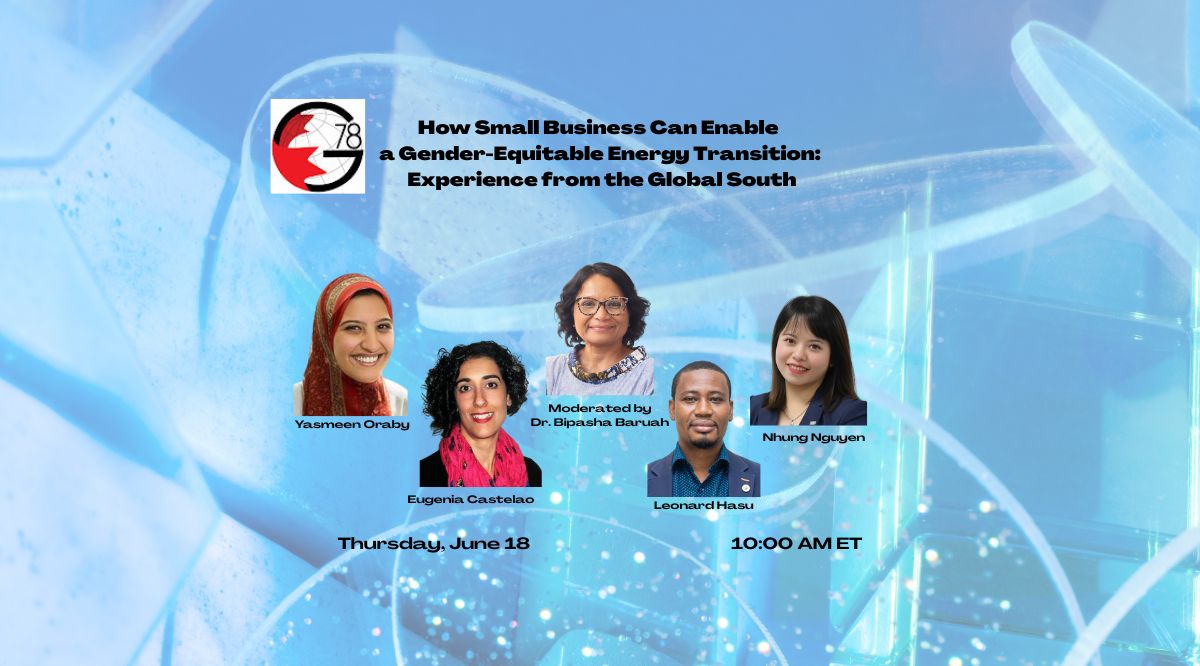
Webinar: How Small Business Can Enable a Gender-Equitable Energy Transition: Experience from the Global South
Thursday 18 June 2026
This webinar is hosted by The Group of 78. How Small Business Can Enable a Gender-Equitable Energy Transition: Experience from the Global South Thursday 18 June 2026 10:00am – 11:30am EDT (check your local time) Register to attend online The Clean Energy for Development: A Call to Action (CEDCA) initiative, funded by the International Development […]
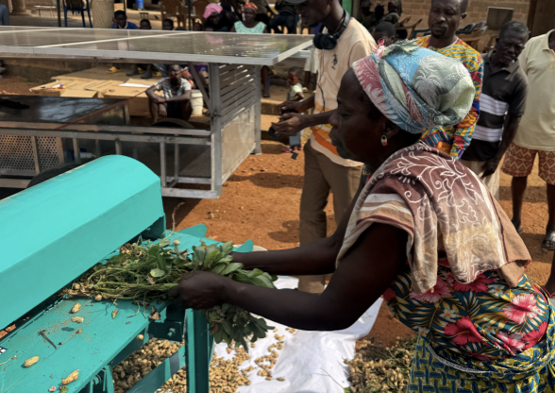
Smallholder farmer testing INFoCAT renewable energy powered groundnut pod plucker in Gomoa (Central Region, Ghana). Photo by UNU INRA.
Clean Energy Transitions: A Care Economy Lens
20 April 2026
How can clean energy transitions reduce energy poverty while also addressing the unequal burden of unpaid care work? This is an increasingly urgent question as the global shift to clean energy reshapes not only energy systems, but everyday life within households. Across many low- and middle-income countries, women and girls continue to shoulder a disproportionate […]
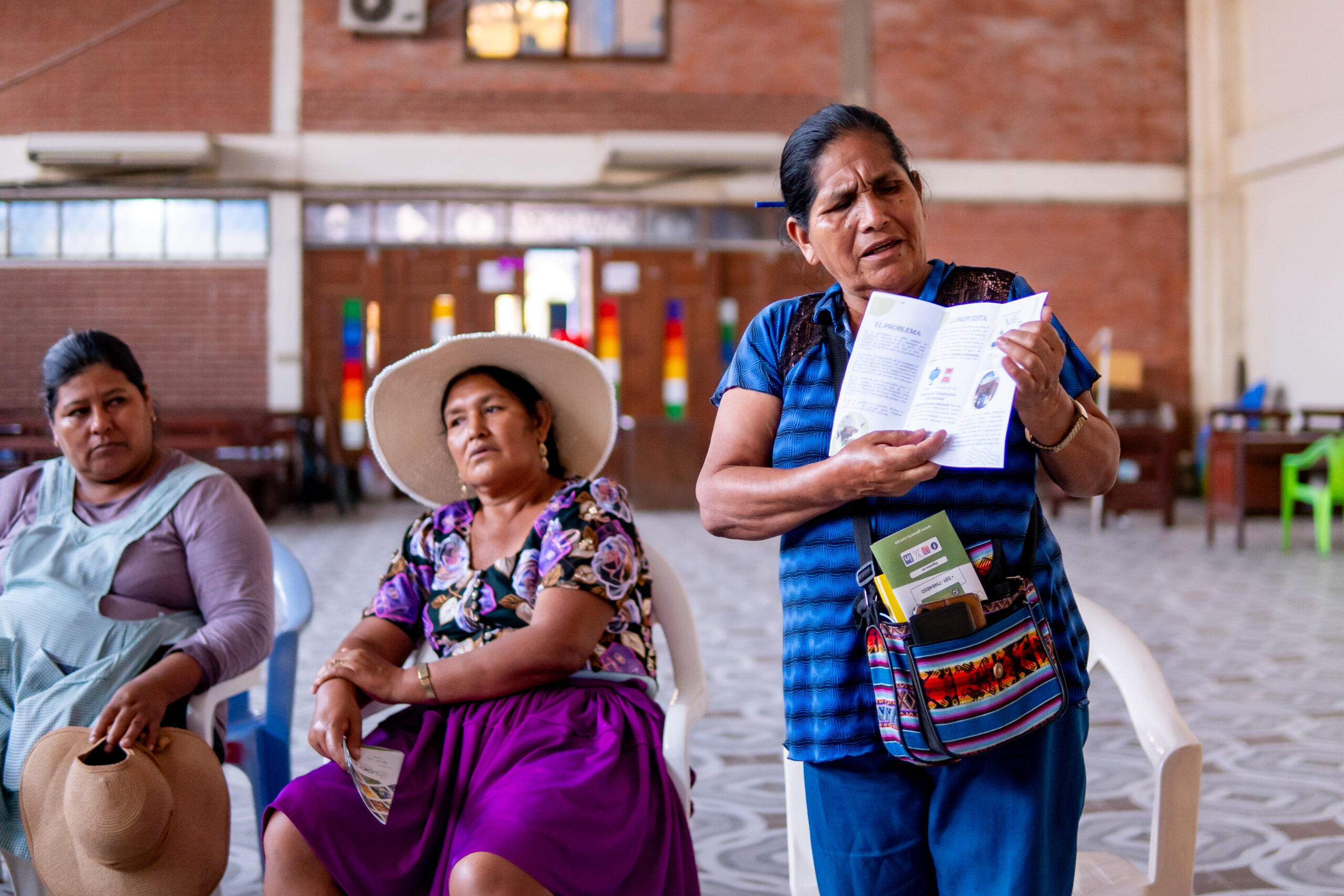
Decentralised renewable energy for rural SMEs in Bolivia: benefits, opportunities and challenges for women
8 July 2026
Bolivia is facing an energy crisis marked by shortages of diesel and petrol, and by high energy costs. For small and medium-sized rural family-based enterprises (SMEs), which play a central role in food production and in sustaining rural livelihoods, this situation increases operating costs, affects productive continuity and limits competitiveness, especially in territories with limited […]