
Webinar: How Small Business Can Enable a Gender-Equitable Energy Transition: Experience from the Global South
This webinar is hosted by The Group of 78.
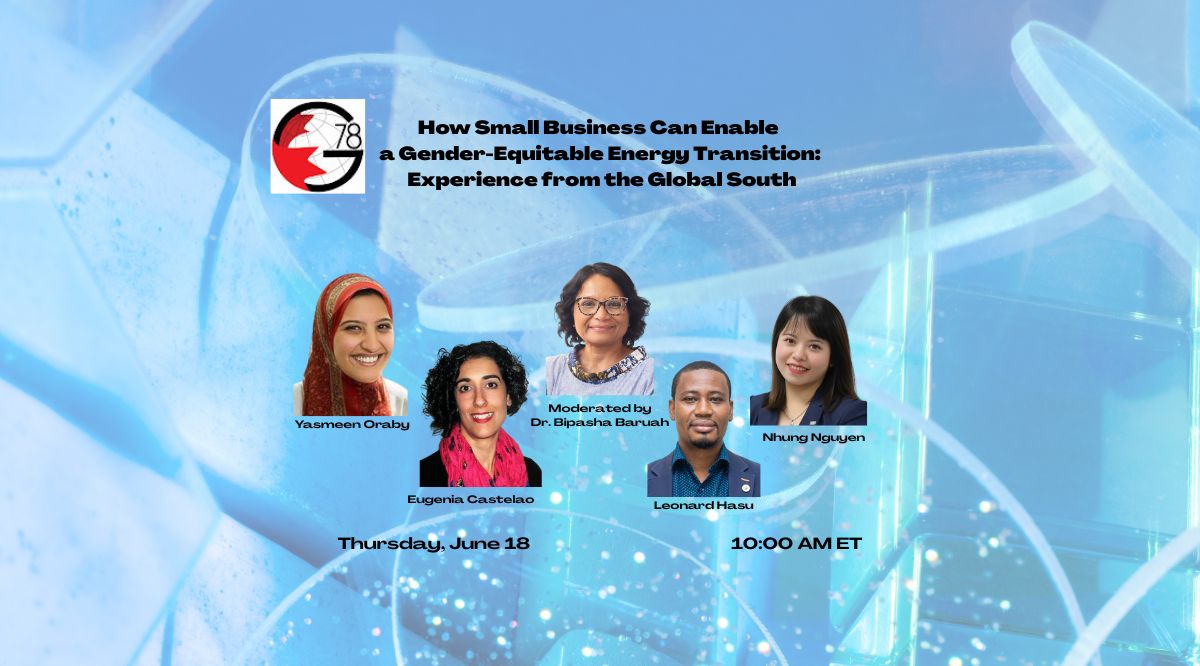
How Small Business Can Enable a Gender-Equitable Energy Transition: Experience from the Global South
Thursday 18 June 2026
10:00am – 11:30am EDT (check your local time)
Register to attend online
The Clean Energy for Development: A Call to Action (CEDCA) initiative, funded by the International Development Research Centre (IDRC), supports 12 research projects that operate in 27 countries in Sub-Saharan Africa, Asia, Central and South America, and the Middle East and North Africa (MENA) to produce systematic and rigorous empirical data to inform three themes: clean energy transition, micro-, small and medium-sized enterprises (MSMEs), and women and youth.
We are particularly interested in the potential that MSMEs hold to generate employment and entrepreneurial opportunities via transition to clean energy because they are known to be powerful engines and force multipliers for poverty alleviation and social mobility. As just one example, the Economic Research Forum (ERF), which led one of the 12 CEDCA projects, reported that in countries in the MENA region, MSMEs represent 90% of all firms and 60% of all employment.
This webinar grew out of our interest in wanting to discuss how a transition out of fossil fuels might present opportunities to bridge global economic divides and create new possibilities for promoting inclusivity and building a sustainable and just future. We pay close attention to gender equality and youth inclusion because a just transition cannot focus solely on reducing carbon emissions. We must also ensure that a global clean or low-carbon economy will be more gender equitable and socially just than its fossil-fuel based predecessor.
Speakers:
Yasmeen Oraby is a professional in the development field with over 13 years of experience in areas related to sustainable energy, youth, gender inclusion, communication, advocacy, and policy. Currently, she serves as ERF Programs Manager. Prior to joining ERF, she held positions with the Center for Applied Research on the Environment and Sustainability at the American University of Egypt and the Regional Center of Renewable Energy and Energy Efficiency (ECREEE). CEDCA project: The Role of MSMEs in Fostering Inclusive and Equitable Economic Growth in the Context of the Clean Energy Transition in MENA
María Eugenia Castelao Caruana is an economist and adjunct researcher at Fundación Bariloche. Co-director of the GENERIS Bolivia project, she has led studies on renewable energy, energy poverty, and industrial development across Latin America. Her work combines heterodox economics with empirical policy analysis. CEDCA project: Decentralised Renewable and Inclusive Energy Systems in Bolivia (GENERIS)
Leonard Hasu is a seasoned Ghanaian professional with over 14 years’ experience in monitoring & evaluation, SME development, entrepreneurship, value chains, and project management. He is M&E Coordinator at United Nations University-Institute for Natural Resources in Africa (UNU-INRA). His work covers climate change, agriculture, and environment sectors. CEDCA project: Innovate for Clean Powered Agro Technologies (INFoCAT)
Nhung Nguyen is a lecturer and researcher at the University of Commerce, Vietnam, with research interests in economic development, sustainable development, organizational behaviour, and labour economics. Her recent work explores the role of artificial intelligence, innovation, and human resource management in shaping sustainable performance, employment outcomes, and organizational effectiveness, particularly in emerging economies. CEDCA project: Rural renewable energy MSMEs operating to modernize agriculture in Sub Saharan Africa and South East Asia: Barriers, opportunities, and implications for inclusive low-carbon transition
Moderator:
Bipasha Baruah is Professor and Western Research Chair in Global Women’s Issues at the University of Western Ontario. Dr. Baruah conducts interdisciplinary research on gender, economy, environment, and development. She serves frequently as an advisor to international development and environmental protection organizations.
Watch the webinar here.
event
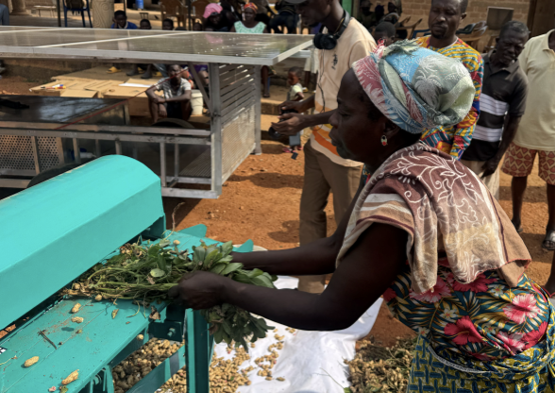
Smallholder farmer testing INFoCAT renewable energy powered groundnut pod plucker in Gomoa (Central Region, Ghana). Photo by UNU INRA.
Webinar: Clean Energy Transitions: A care economy lens
Wednesday 16 September 2026
Clean energy transitions: what changes when we put care at the centre? Join us for an engaging webinar exploring how clean energy transitions can do more than expand access to power: they can also reduce drudgery, shift how unpaid care work is recognised and shared, and open up new opportunities for women and young people in […]
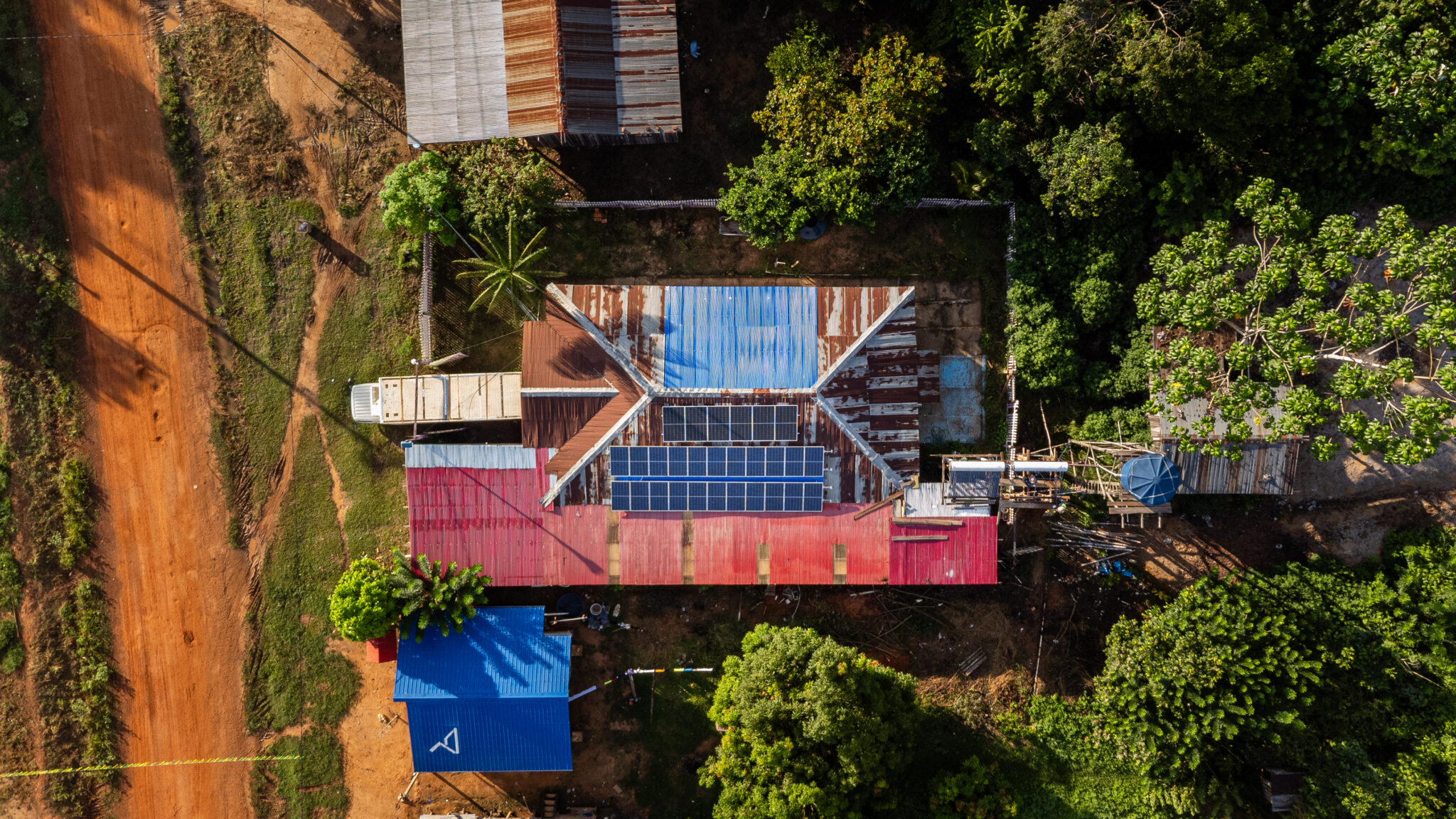
Solar panels, Bolivia
Inclusive and Clean Energy for SMEs in Rural Bolivia
7 October 2026
Bolivia has achieved high rates of electricity access, yet rural and semi-rural producers still face major barriers to securing reliable, affordable energy for productive use. Small- and medium-sized enterprises (SMEs) in the agrifood sector play a central role in ensuring national food security and creating employment. However, they remain highly dependent on fossil-fuel-powered pumps with […]
Smallholder farmer testing INFoCAT renewable energy powered groundnut pod plucker in Gomoa (Central Region, Ghana). Photo by UNU INRA.
Putting care at the centre of clean energy transitions
14 October 2026
Clean energy transitions are often discussed in terms of technology, finance and climate targets. But what changes when we put care at the centre? Across many low- and middle-income countries, women and girls carry a disproportionate share of unpaid care and domestic work. Cooking, collecting fuel and water, caring for others, processing food, and sustaining […]