
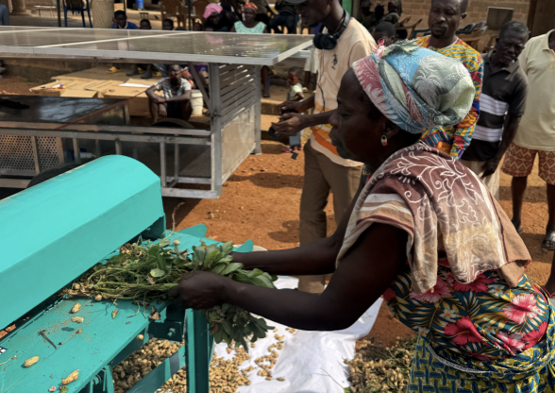
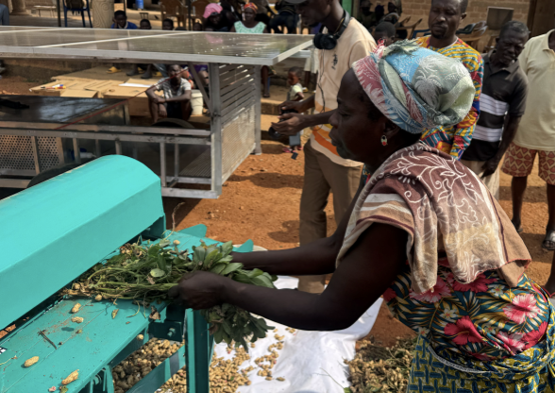
Smallholder farmer testing INFoCAT renewable energy powered groundnut pod plucker in Gomoa (Central Region, Ghana). Photo by UNU INRA.
Clean Energy Transitions: A Care Economy Lens
20 April 2026
How can clean energy transitions reshape not only how energy is produced and consumed, but also how care work is organised and distributed within households?
This is becoming a central question as the global shift to clean energy transforms everyday life, particularly in low- and middle-income countries. Clean energy interventions can reduce the time and physical burden of unpaid care and domestic work, which falls disproportionately on women and girls. By cutting reliance on biomass, reducing cooking time, and enabling work after dark, these technologies can address energy poverty while shifting how time and labour are organised in the home.
But this shift is not automatic. Without deliberate attention to the care economy, clean energy transitions risk overlooking or reinforcing existing inequalities. Efficiency gains alone may ease workloads without changing who does the work.
This Research for Policy and Practice report, developed under the Clean Energy for Development: A Call to Action initiative, draws on three research projects that examine clean energy through a care lens. Using evidence from West Africa and multi-country studies in Vietnam, Burkina Faso, Uganda and Kenya, it explores how energy access affects women’s time, reduces drudgery, and opens up possibilities for a more equal distribution of labour. It shows that the success of clean energy transitions depends on how well care is built into them.
Authored by Rumbidzayi Makoni, Jessica Meeker, Jorge Davalos, Jane Mariara, Maria-Ancilla Bombande, Barbara Baidoo, Leonard Hasu, Vanessa Awanyo, Michele Diop, Luciano Barin-Cruz, Ibrahima Dally Diouf, Syrine Gabsi, Modou Wade.
Summary
How can clean energy transitions reduce energy poverty while also addressing the unequal burden of unpaid care work?
This is an increasingly urgent question as the global shift to clean energy reshapes not only energy systems, but everyday life within households. Across many low- and middle-income countries, women and girls continue to shoulder a disproportionate share of unpaid care and domestic work, much of which is closely tied to energy access. Clean energy technologies such as solar irrigation, clean cooking solutions, and decentralised systems have the potential to reduce time spent on fuel collection, cooking, and manual labour, easing physical strain and freeing up time for rest, education, or income-generating activities.
Yet without deliberate attention to care dynamics, these transitions risk reproducing existing inequalities. If policies and programmes focus only on efficiency or productivity, they may fail to shift how labour is distributed within households, or who benefits from time savings and new opportunities. Integrating a care economy lens into clean energy planning is therefore critical to ensuring that transitions are not only low-carbon, but also more equitable and inclusive.
Cite this publication
Makoni, R. et al. (2026) Clean Energy Transitions: A Care Economy Lens, Clean Energy for Development: A Call to Action (CEDCA) Research for Policy and Practice, Brighton: Institute of Development Studies, DOI: 10.19088/CEDCA.2026.001
Copylearning
Theme
Clean Energy, Inclusion, Gender, Care Labour
Documents
Smallholder farmer testing INFoCAT renewable energy powered groundnut pod plucker in Gomoa (Central Region, Ghana). Photo by UNU INRA.
Webinar: Clean Energy Transitions: A care economy lens
Wednesday 16 September 2026
Clean energy transitions: what changes when we put care at the centre? Join us for an engaging webinar exploring how clean energy transitions can do more than expand access to power: they can also reduce drudgery, shift how unpaid care work is recognised and shared, and open up new opportunities for women and young people in […]
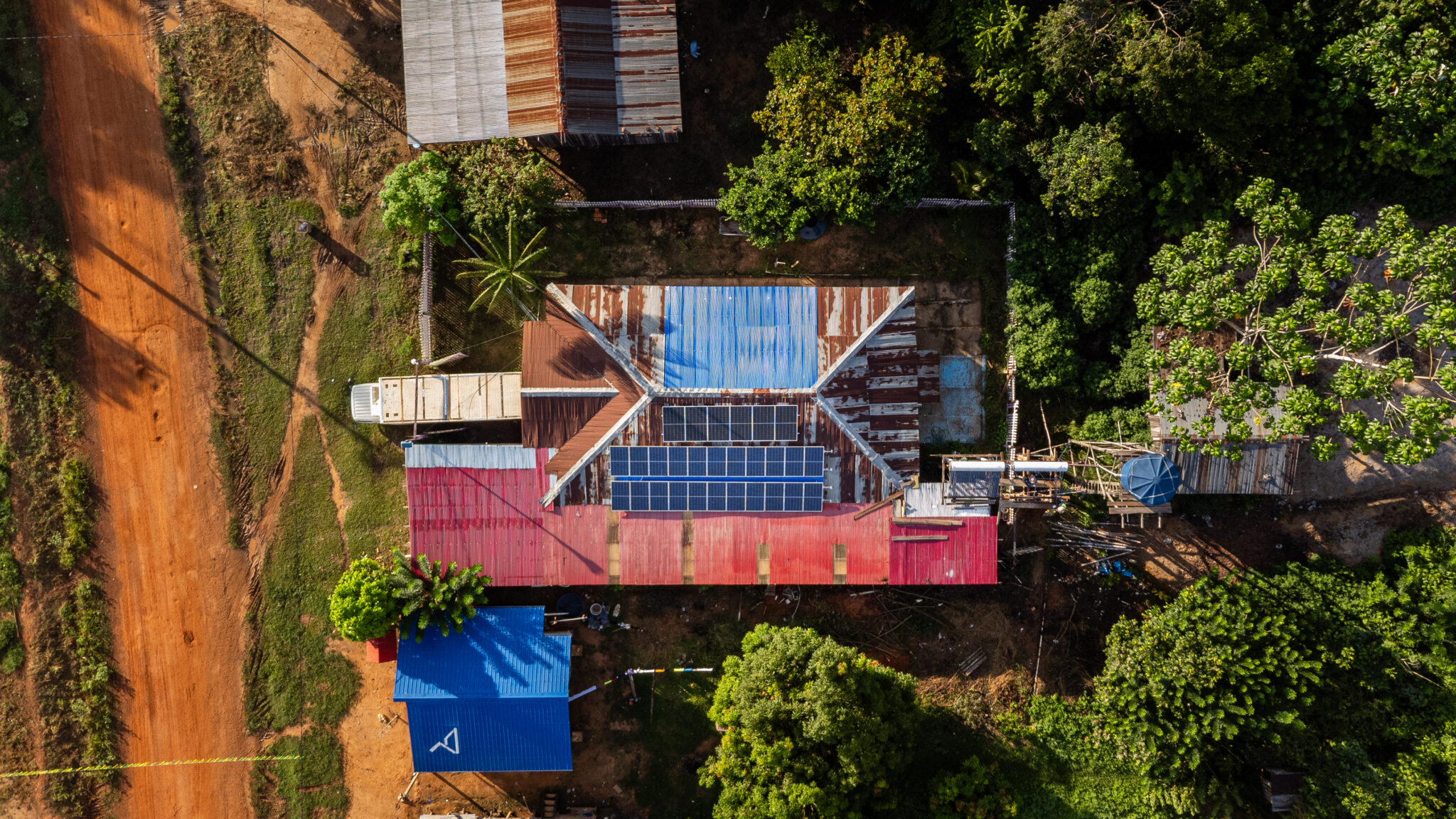
Solar panels, Bolivia
Inclusive and Clean Energy for SMEs in Rural Bolivia
7 October 2026
Bolivia has achieved high rates of electricity access, yet rural and semi-rural producers still face major barriers to securing reliable, affordable energy for productive use. Small- and medium-sized enterprises (SMEs) in the agrifood sector play a central role in ensuring national food security and creating employment. However, they remain highly dependent on fossil-fuel-powered pumps with […]
Smallholder farmer testing INFoCAT renewable energy powered groundnut pod plucker in Gomoa (Central Region, Ghana). Photo by UNU INRA.
Putting care at the centre of clean energy transitions
14 October 2026
Clean energy transitions are often discussed in terms of technology, finance and climate targets. But what changes when we put care at the centre? Across many low- and middle-income countries, women and girls carry a disproportionate share of unpaid care and domestic work. Cooking, collecting fuel and water, caring for others, processing food, and sustaining […]