
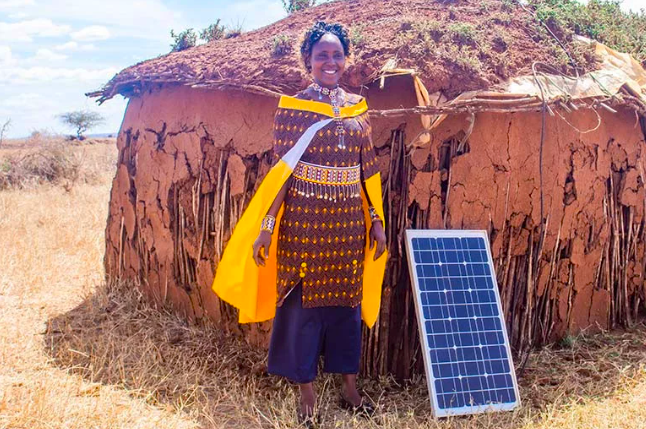
A woman stands proudly beside her home and solar panel in rural Kenya, a symbol of resilience and clean energy empowerment. image: mycliamte.org
Sustainable energy for all and economic transformation in the Global South
5 June 2025
Energy access should open opportunities at both ends of the energy equation for it to fulfil its transformative potential
This article was written by Erin Tansey and Flaubert Mbiekop from the International Development Research Centre (IDRC). It draws on insights from IDRC’s funded Clean Energy for Development: A Call to Action (CEDCA) initiative. The initiative aims to inform policy reforms and business strategies leading to transformative change across societies through applied research for inclusive and people-centred energy transitions.
On 12-13 March 2025, Sustainable Energy for All and the Government of Barbados co-hosted the 2025 SEforALL Global Forum in Bridgetown under the theme “Sustainable Energy for Equity, Security and Prosperity.” This year’s Forum focused on catalysing the actions and investment needed for countries to achieve their energy access, climate and development goals. Lots of major, sizable investment announcements were made, indeed. And new incomers into this impressive gathering of key stakeholders in the (clean) energy space will for sure be impressed by the line up of speakers from top governments’ officials, private sector heavyweights, donor agencies’ senior managers, civil society organizations’ rising stars, award-wining innovators and Ivy league schools’ students.
Bridgetown was certainly testimony of the huge potential that the energy sector represents from a developmental perspective but also from an investment and business standpoint: Insightful discussions on the energy challenge still facing hundreds of millions of people across the globe and especially in Africa with over 600 million out of the estimated 800 million people globally without access to energy living in Africa (World Bank, 2024), discussions on political will and national strategies, investment commitments worth hundreds of millions of dollars, partnership and collaboration negotiations and agreements, job and internship hunting, and more. Harnessing all the magic and energy of the conference venue in Bridgetown would very likely translate into tangible and visible realisations on the ground, from new power plants to new solar energy farms and what else.
It was strikingly refreshing to see the level of collaboration and interdependency in the (clean) energy space with follow up to conversations that started at the Mission 300 Africa Energy Summit in Tanzania, IRENA holding a session on their joint work with SE4ALL on energy planning in support to national governments in developing countries, Brazil designated COP president reflecting on the future of climate action in an era of protectionism and geo-political tensions at a fireside chat with a just as knowledgeable journalist from Bloomberg, Sierra Leonne’s sitting President and Nigeria’s former vice president reflecting on Africa’s expectations and ambitions with regards to energy access for their people before flying to Addis Abeba for an important African Union Summit.
Ensuring that healthcare centres in Freetown operate on affordable, reliable energy cannot only be life-saving but also fulfilling for the medical staff. Ensuring that street vending women in Nigeria’s Enugu can safely store their fresh goods without fearing a power outage is for sure empowering. Lighting houses in Nairobi’s slums or in remote areas of Tanzania undoubtedly improves school-goers’ learning outcomes and prospects.
However, with only five years left to the realisation of the Sustainable Development Goals, time is of the essence, and focusing only on the access end of the (clean) energy equation may not be transformative enough. Far too many people may still be living in extreme poverty by 2030. Far too many people may still lack decent jobs by 2030.
The notion of people-centered energy transitions championed by Canada’s International development research centre and the International energy agency amongst others is an invitation to think beyond energy for all and to embrace a holistic approach to inclusion where energy is by all and for all. As the world transitions to a low-carbon path, the energy transition is reshaping labour markets and economies in ways that are generating opportunities for some but threatening the livelihood of others. This structural economic shift involves not only changes in human and capital resource allocation and mobilisation, but also drives new patterns of economic development, job creation, and unemployment. Past economic structural transformations have demonstrated that reallocating the workforce from declining to emerging industries or sectors can be disruptive and lead to socioeconomic unrest if not properly managed. This, in turn, can derail the entire process as capital seeks a haven elsewhere.
At stake, therefore, is not just energy access, but also the mechanics of it. For many developing countries, the global energy transition presents an opportunity to increase generation, access, and productive use, while also delivering job-intensive green industrialisation, thereby supporting climate action. There are compelling reasons to be interested in the industrial and labour implications of the transition, particularly in light of calls for a just energy transition as part of a broader just transition of the global economy (Institute of Economic Justice, forthcoming). The just transition has provided a critical lens through which to consider and interrogate the goals, mechanisms, processes, and outcomes of the global ‘sustainable’ energy transition in the Global South. Understanding the complex set of actors and relationships involved in production processes, which are vertically disaggregated and geographically dispersed, can help unpack the potential for social upgrading through the localisation of various productive processes in the clean energy economy. The actions of firms, states, workers, and civil society can hence be connected.
With these considerations in mind, visionary investors sharing the stage with policy makers, labour unions and MSMEs promoters in the (clean) energy value chain stand significant chances of triggering transformative dialogues that can eventually set the world on the path to meeting more of the SDGs in a timely manner.
blog
Lead Partner
International Development Research Centre (IDRC)
The International Development Research Centre (IDRC; French: Centre de recherches pour le développement international, CRDI) is a Canadian federal Crown corporation. As part of Canada's foreign affairs and development efforts, IDRC champions and funds research and innovation within and alongside Global South regions to drive global change. IDRC invests in high-quality research in the Global South, shares knowledge with researchers and policymakers for greater uptake and use, and mobilizes global alliances to build a more sustainable and inclusive world.
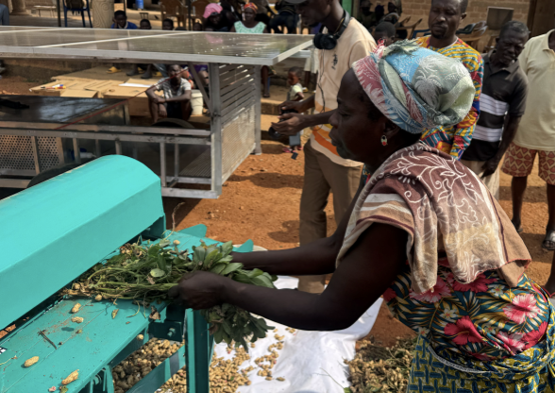
Smallholder farmer testing INFoCAT renewable energy powered groundnut pod plucker in Gomoa (Central Region, Ghana). Photo by UNU INRA.
Webinar: Clean Energy Transitions: A care economy lens
Wednesday 16 September 2026
Clean energy transitions: what changes when we put care at the centre? Join us for an engaging webinar exploring how clean energy transitions can do more than expand access to power: they can also reduce drudgery, shift how unpaid care work is recognised and shared, and open up new opportunities for women and young people in […]
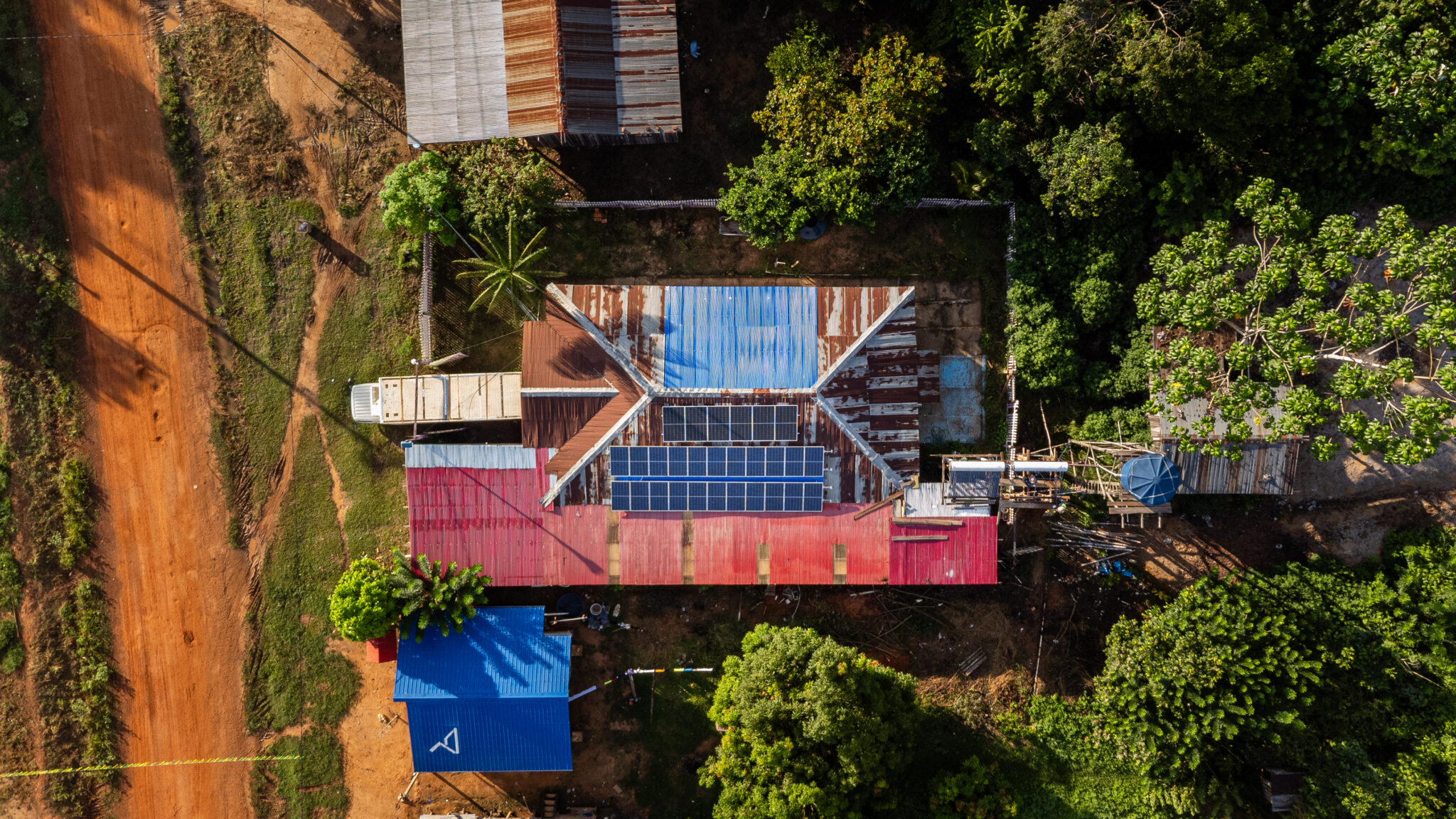
Solar panels, Bolivia
Inclusive and Clean Energy for SMEs in Rural Bolivia
7 October 2026
Bolivia has achieved high rates of electricity access, yet rural and semi-rural producers still face major barriers to securing reliable, affordable energy for productive use. Small- and medium-sized enterprises (SMEs) in the agrifood sector play a central role in ensuring national food security and creating employment. However, they remain highly dependent on fossil-fuel-powered pumps with […]
Smallholder farmer testing INFoCAT renewable energy powered groundnut pod plucker in Gomoa (Central Region, Ghana). Photo by UNU INRA.
Putting care at the centre of clean energy transitions
14 October 2026
Clean energy transitions are often discussed in terms of technology, finance and climate targets. But what changes when we put care at the centre? Across many low- and middle-income countries, women and girls carry a disproportionate share of unpaid care and domestic work. Cooking, collecting fuel and water, caring for others, processing food, and sustaining […]