

PEP-Led Conference Highlights Inclusive Green Energy Challenges in the Global South
2 June 2025
Following the COP29 summit in Azerbaijan, where partial funding commitments were made to support climate efforts in developing countries, the urgency for actionable solutions has never been clearer. Yet, despite these new pledges, the financing gap remains vast, and shifting geopolitical dynamics now pose even greater risks to global climate finance.
Developing economies in Africa, Asia, and Latin America face unique obstacles in financing and implementing green energy infrastructure. Beyond the technological and financial barriers, there is a pressing need to ensure that vulnerable groups, including women, youth, and rural micro, small, and medium-sized enterprises (MSMEs), are not left behind in the energy transition.
Drawing on PEP’s extensive research and engagement efforts, the 2025 Policy Conference will showcase cutting-edge findings and promote evidence-based policy dialogue. Highlights will include insights from:
- Sustainability Performances, Evidence, and Scenarios (SPES)project (funded by the EU Horizon program), where PEP fosters high-level dialogues on sustainable energy transitions.
- Rural renewable energy MSMEs operating to modernize agriculture in Sub Saharan Africa and South-East Asia (in collaboration with Environment for Development (EfD) with funding from the International Development Research Centre (IDRC)) to promote the adoption of low-carbon technologies by rural enterprises and the inclusion of women and youth in countries like Burkina Faso, Kenya, Uganda, and Vietnam.
- How Can Multilateral Development Banks Better Support Green Energy Transition and Financing in the Global South? Research supported by the Center for Global Development (CGD), examining feasible financing mechanisms for green energy transitions in Pakistan and South Africa.
Conference Program Overview:
9:00 AM — Welcome Remarks
- Carol Newman, Board Chair, PEP
- Jane Mariara, Executive Director, PEP
9:30 AM — Keynote Presentation
“Financing and Inclusivity in Green Energy Transitioning in the Global South”
Keynote Speaker: Dr. Simone Borghesi, Director, Florence School of Regulation – Climate, European University Institute
10:45 AM — Panel 1:
“Challenges in Financing and Implementing Green Energy Infrastructure Unique to the Global South”
Panelists:
- Muhammad Zeshan, Research Fellow, Pakistan Institute of Development Economics
- Prof. Adeola Adenikinju, Professor of Economics, University of Ibadan, Nigeria
- Bhim Adhikari, Senior Program Specialist, IDRC
- Elizabeth Njenga, General Manager, Business Development, KenGen
2:00 PM — Panel 2:
“Towards a Just Green Transition: Integrating National Realities and Inclusivity”
Panelists:
- Agnès Zabsonré, Assistant Professor, Université Nazi Boni, Burkina Faso
- Aisha Nanyiti, Lecturer, Makerere University, Uganda
- Joanes Atela, Executive Director, African Research Impact Network
- Ann Kingiri, Principal Research Fellow and Director of Research and Innovation, African Centre for Technology Studies
4:00 PM — Key Takeaways and Research Agenda
4:30 PM — Closing Remarks
The 2025 PEP Policy Conference will bring together international researchers, policymakers, development practitioners, and other stakeholders to bridge the gap between research and policy, promoting inclusive and sustainable economic development.
PEP is thrilled to welcome participants both in-person and virtually. The event will be broadcast live on PEP’s YouTube channel starting at 9:00 a.m. (UTC+3).
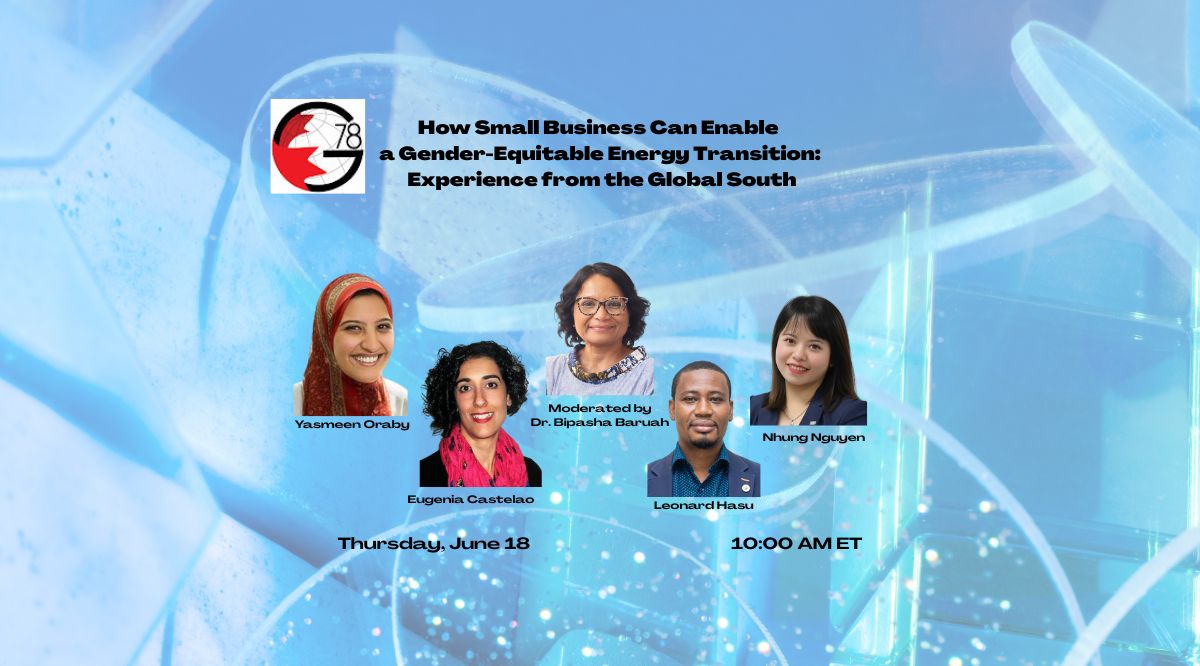
Webinar: How Small Business Can Enable a Gender-Equitable Energy Transition: Experience from the Global South
Thursday 18 June 2026
This webinar is hosted by The Group of 78. How Small Business Can Enable a Gender-Equitable Energy Transition: Experience from the Global South Thursday 18 June 2026 10:00am – 11:30am EDT (check your local time) Register to attend online The Clean Energy for Development: A Call to Action (CEDCA) initiative, funded by the International Development […]
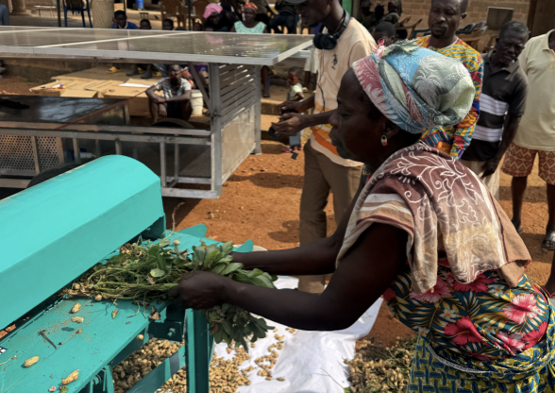
Smallholder farmer testing INFoCAT renewable energy powered groundnut pod plucker in Gomoa (Central Region, Ghana). Photo by UNU INRA.
Clean Energy Transitions: A Care Economy Lens
20 April 2026
How can clean energy transitions reduce energy poverty while also addressing the unequal burden of unpaid care work? This is an increasingly urgent question as the global shift to clean energy reshapes not only energy systems, but everyday life within households. Across many low- and middle-income countries, women and girls continue to shoulder a disproportionate […]
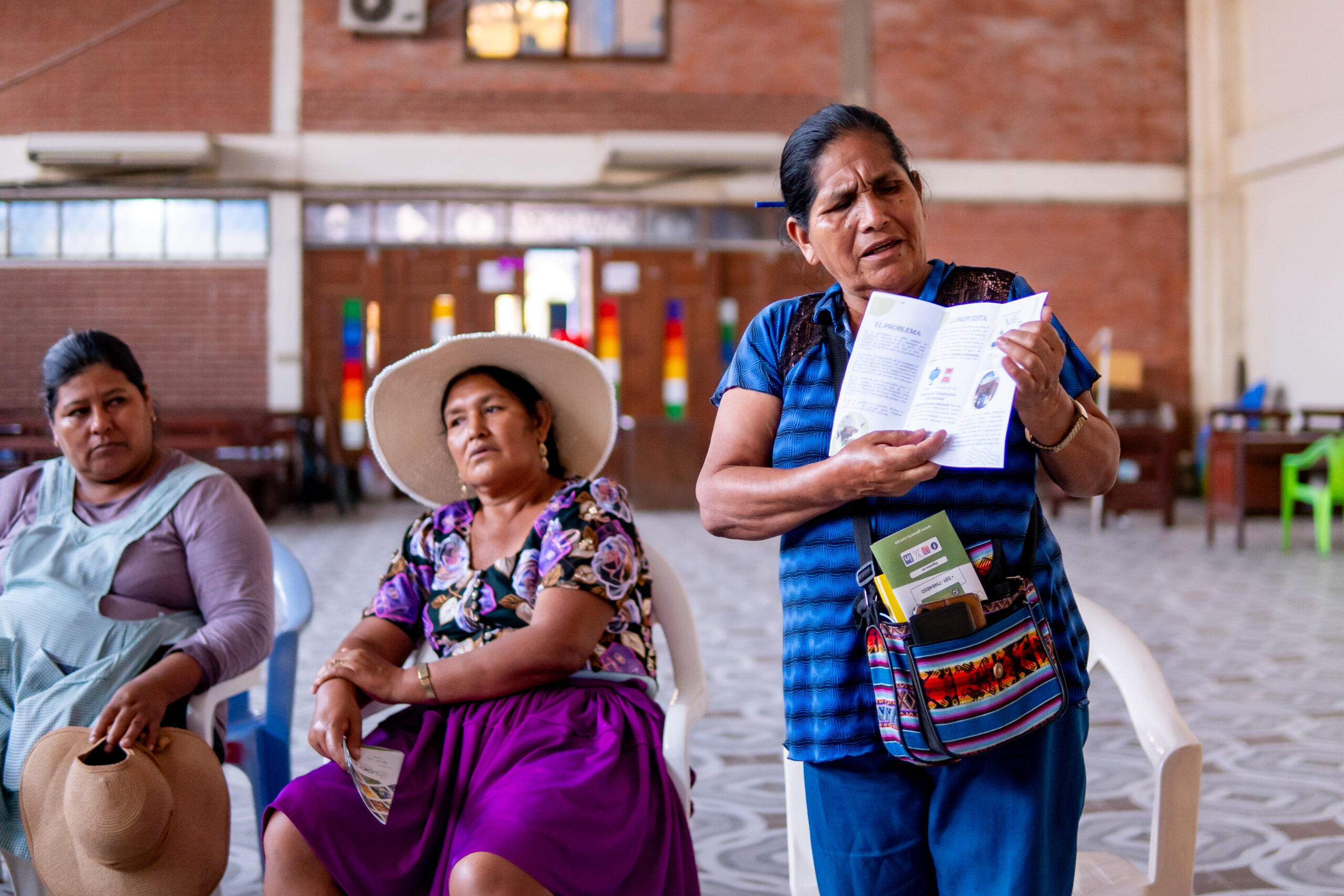
Decentralised renewable energy for rural SMEs in Bolivia: benefits, opportunities and challenges for women
8 July 2026
Bolivia is facing an energy crisis marked by shortages of diesel and petrol, and by high energy costs. For small and medium-sized rural family-based enterprises (SMEs), which play a central role in food production and in sustaining rural livelihoods, this situation increases operating costs, affects productive continuity and limits competitiveness, especially in territories with limited […]