

'ILO photo e6456' by International Labour Organization ILO via Flickr (CC BY-NC-ND 2.0) https://flic.kr/p/2iWPV4Q Country : Sri Lanka Date : 2007-11 Copyright : Perera Y.R. / ILO

Request for Proposals: Gender-Responsive Climate Blended Finance Research Project
6 December 2024
The CC Facility Learning Hub is seeking to build upon the knowledge within its inaugural report on gender-responsive blended climate finance transactions in the energy sector, through engaging with a local institute to collaborate on the design and implementation of a research project (“the project”).
The project will inform key data gaps in the gender-climate nexus, specifically within the blended climate finance market.
Growing evidence points to women playing a critical role in achieving climate goals, acting as benefit-multipliers and important agents of change at all levels of society. There is thus an urgent need to leverage their roles as consumers, workers, borrowers, entrepreneurs, and community leaders and increase investments into transactions that incorporate both gender and climate considerations.
Yet, mainstreaming gender in climate vehicles often encounters a myriad of barriers. This is apparent in the blended finance market, where out of the 551 climate blended finance deals in Convergence’s Historical Deals Database (HDD), only 22% were gender-responsive, a considerably lower proportion than the overall trend in the blended finance market where 31% of the deals were gender-responsive.
The project will therefore consist of conducting research with the goal of helping to mobilize higher levels of private sector capital into gender responsive climate transactions.
Key details:
- Deadline: 17 December 2024
- Budget: CAD 50,000-75,000
- Research must be related to the climate-gender nexus within the blended finance market and address a current knowledge gap
- Applicants are required to be institutions based in an emerging market and developing economy (EMDE)
- Language: English
Click here to view the Request for Proposal (RFP) for details.
blog
Lead Partner
Convergence & Climate Policy Initiative
Associated Project
Catalytic climate finance: A global learning hub
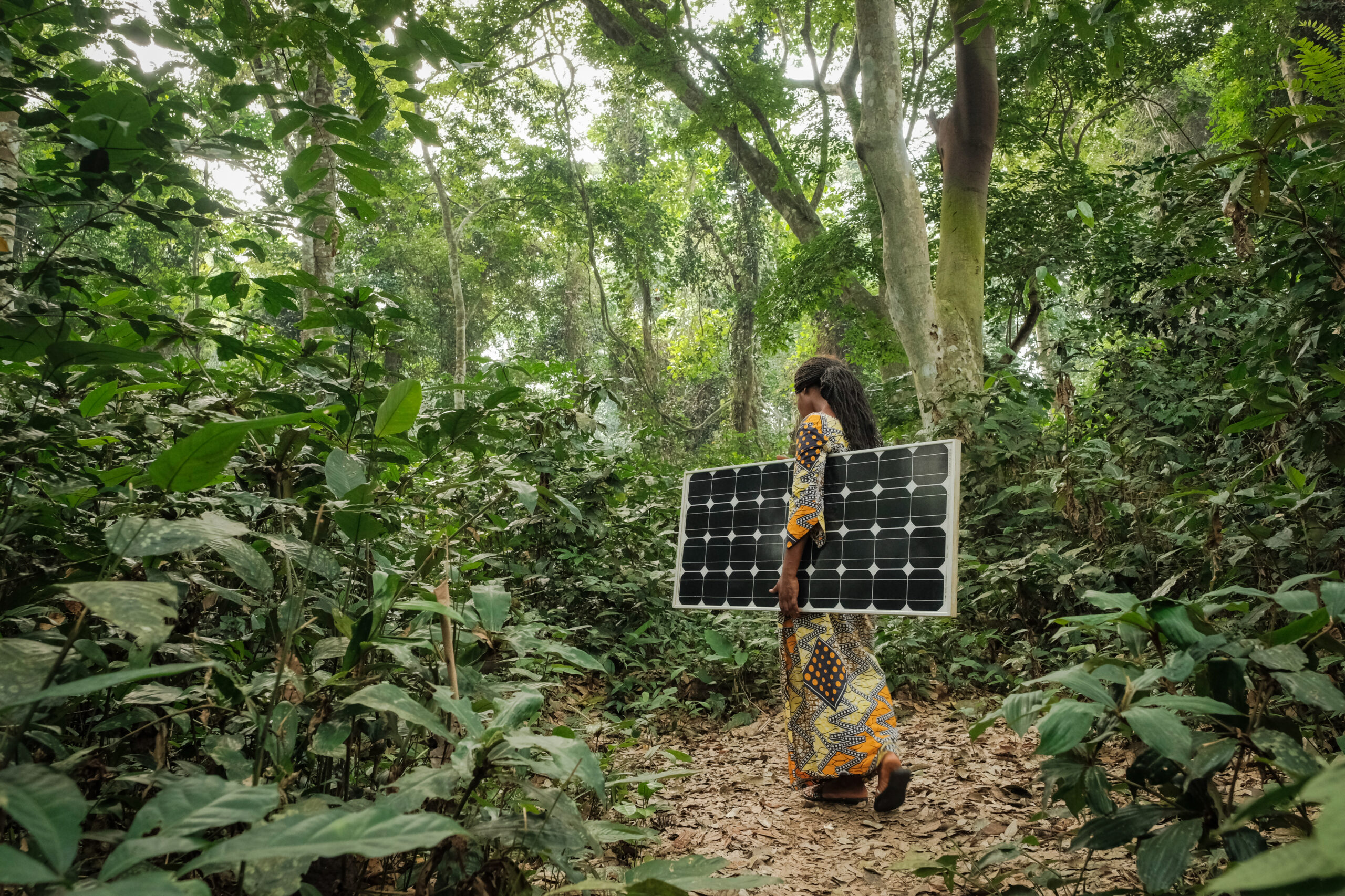
Woman carrying a solar pannel near Yangambi, DRC. Photo by Axel Fassio/CIFOR via Flickr under licence CC BY-NC-ND 2.0. https://flic.kr/p/27NYoQe
Gender-Responsive Renewable Energy for Empowerment and Inclusive Energy Transitions
Tuesday 10 November 2026
This side event, hosted by the International Centre for Integrated Mountain Development (ICIMOD) as part of COP31, will explore how gender-responsive renewable energy can strengthen women’s livelihoods, agency and economic opportunities, drawing on field experiences from regional and global evidence, policy and financing perspectives. This event is in-person only, and open to anyone attending the […]
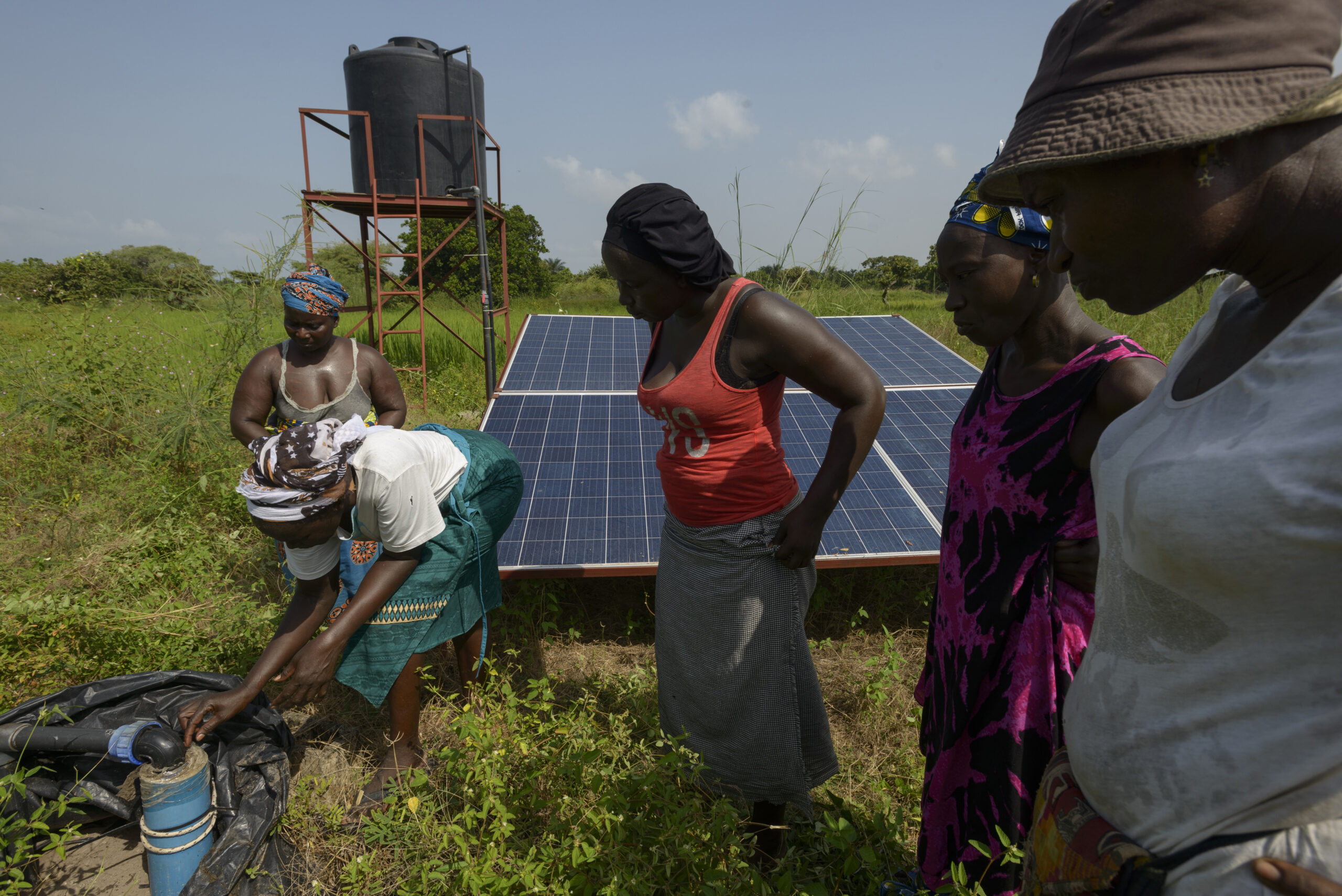
Women working in their fields in GIE Kaout, a women- led agricultural cooperative in Senegal. The group of 32 women grow rice in order to develop the cultivation of other produce such as fruits and vegetables. Their plot is fenced and has a water tower with solar panels to run the pump. Credit: © JB Russell/Panos Pictures
From Clean Energy Transition to Just Energy Futures
18 November 2026
The major scientific and policy focus of the global clean energy transition has thus far been on issues of technological feasibility. Yet evidence from the Clean Energy for Development research initiative suggests that the greatest barriers to inclusive transition are often not technological, but financial, institutional, and social. Drawing on evidence from 12 projects across […]
Women working in their fields in GIE Kaout, a women- led agricultural cooperative in Senegal. The group of 32 women grow rice in order to develop the cultivation of other produce such as fruits and vegetables. Their plot is fenced and has a water tower with solar panels to run the pump. Credit: © JB Russell/Panos Pictures
Beyond COP31: putting people at the heart of the clean energy transition
19 November 2026
As COP31 draws to a close, new evidence from across 27 countries shows that the biggest barriers to an inclusive clean energy transition are often not technological, but financial, institutional and social. As attention shifts from negotiation to delivery, a new research synthesis report ‘From Clean Energy Transition to Just Energy Futures’ offers a practical […]