

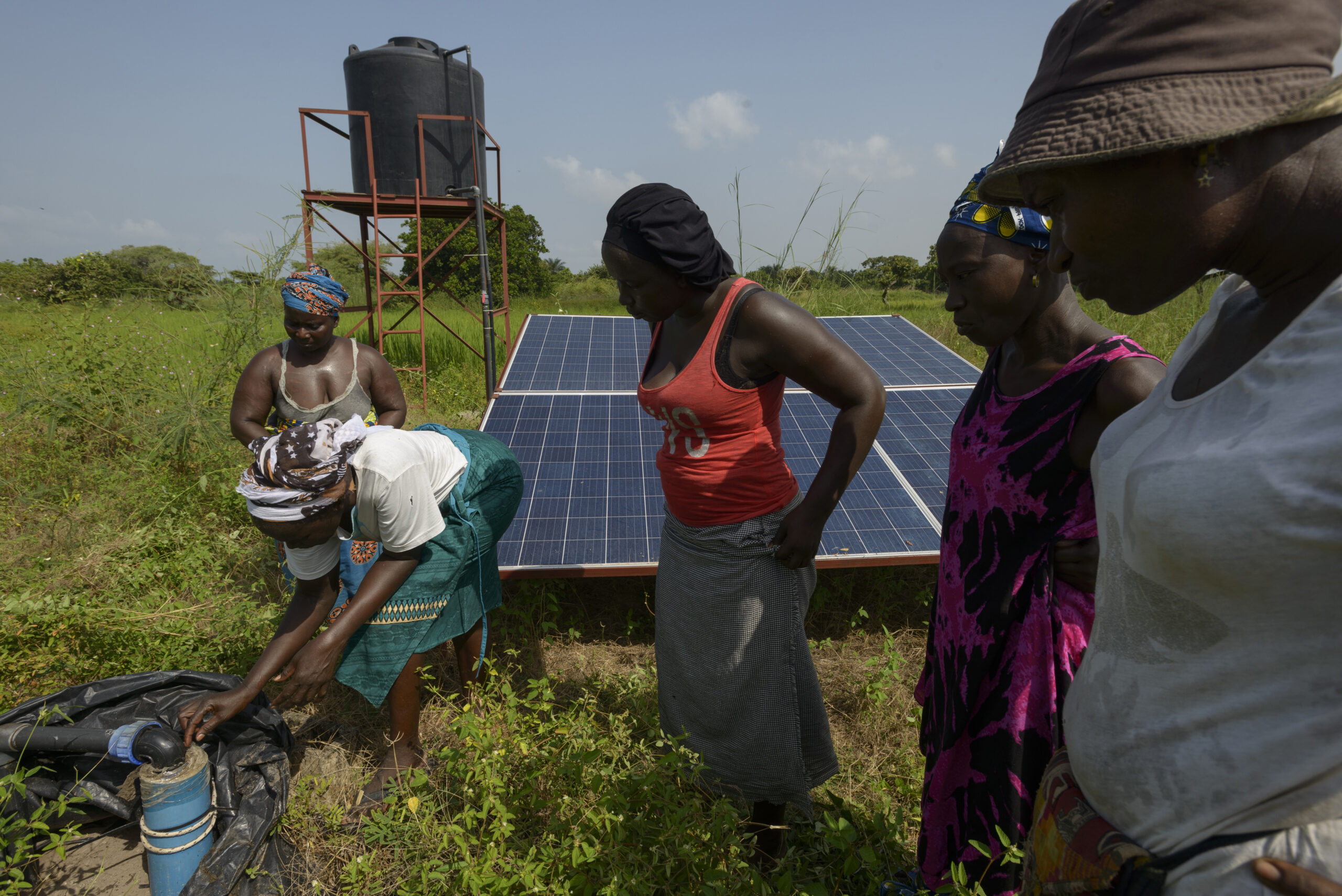
Women working in their fields in GIE Kaout, a women- led agricultural cooperative in Senegal. The group of 32 women grow rice in order to develop the cultivation of other produce such as fruits and vegetables. Their plot is fenced and has a water tower with solar panels to run the pump. Credit: © JB Russell/Panos Pictures
From Clean Energy Transition to Just Energy Futures
18 November 2026
Summary
The major scientific and policy focus of the global clean energy transition has thus far been on issues of technological feasibility. Yet evidence from the Clean Energy for Development research initiative suggests that the greatest barriers to inclusive transition are often not technological, but financial, institutional, and social.
Drawing on evidence from 12 projects across 27 countries, this synthesis explores how the clean energy transition intersects with livelihoods, enterprise development, gender equality, youth opportunity, care responsibilities, finance, governance, and local participation. Collectively, the evidence shows that transition is most effective when it improves people’s livelihoods and economic opportunities, rather than focusing narrowly on technology deployment alone.
Rather than asking how the transition to clean energy can be accelerated, Clean Energy for Development seeks to understand how it can be designed and implemented in ways that expand livelihoods, strengthen local economies, centre inclusion of women and youth, and enable a broader range of people and enterprises to benefit. The key findings and emerging lessons presented here offer evidence-based insights for policymakers, practitioners and development actors seeking to build a clean energy transition that is both effective and equitable.
Summary of key findings
- Livelihoods drive adoption. Clean energy gains traction when it raises productivity, incomes and resilience.
- Finance is necessary but rarely sufficient. Affordable capital must be paired with knowledge, confidence, mentoring and market access.
- Participation does not guarantee agency. Women and young people may participate while remaining excluded from ownership, leadership and higher-value roles.
- Micro-, small-, and medium-sized enterprises (MSMEs) are essential transition actors. Local firms connect technology to users through installation, maintenance, finance and market development.
- Implementation is the central challenge. Weak coordination, regulation and institutional capacity often matter more than technology availability.
Across the diverse settings, a consistent message emerges:
Transitions are effective when technologies are affordable, trusted, and accessible, but sustainability depends on enabling ecosystems where finance, skills and maintenance, and operations services are available, and where supportive policies, institutions and local enterprises help technologies reach scale and deliver lasting benefits.
Lessons and recommendations for policy and practice
- Design interventions around productive uses. Connect energy investments to farming, enterprise, food security, and income generation.
- Build enabling ecosystems. Combine finance with skills, mentoring, networks, maintenance, and market access.
- Strengthen implementation capacity. Align energy, agriculture, finance, enterprise, gender, and climate institutions.
- Design for equitable outcomes. Track who controls assets, income, time, and decisions, not only who gains access.
This review included 189 outputs submitted by the projects. Documents selected for content analysis were conceptual frameworks, project and regional syntheses, policy research reports, empirical studies, surveys, implementation evidence, stories of change and peer-reviewed journal articles. We extracted key findings and messages from each to identify themes and emerging recommendations. We refer to these findings primarily by country and region, and link to the projects from which this evidence has emerged in the table on page 3.
To further explore the findings by project or country, visit www.ce4dev.org.
Download the report here.
Cite this publication
Salm, L. (2026) 'From Clean Energy Transition to Just Energy Futures', CEDCA Key Issues Guide 1, Brighton: Institute of Development Studies, DOI: 10.19088/CEDCA.2026.004
Copylearning
Theme
just transitions
Documents
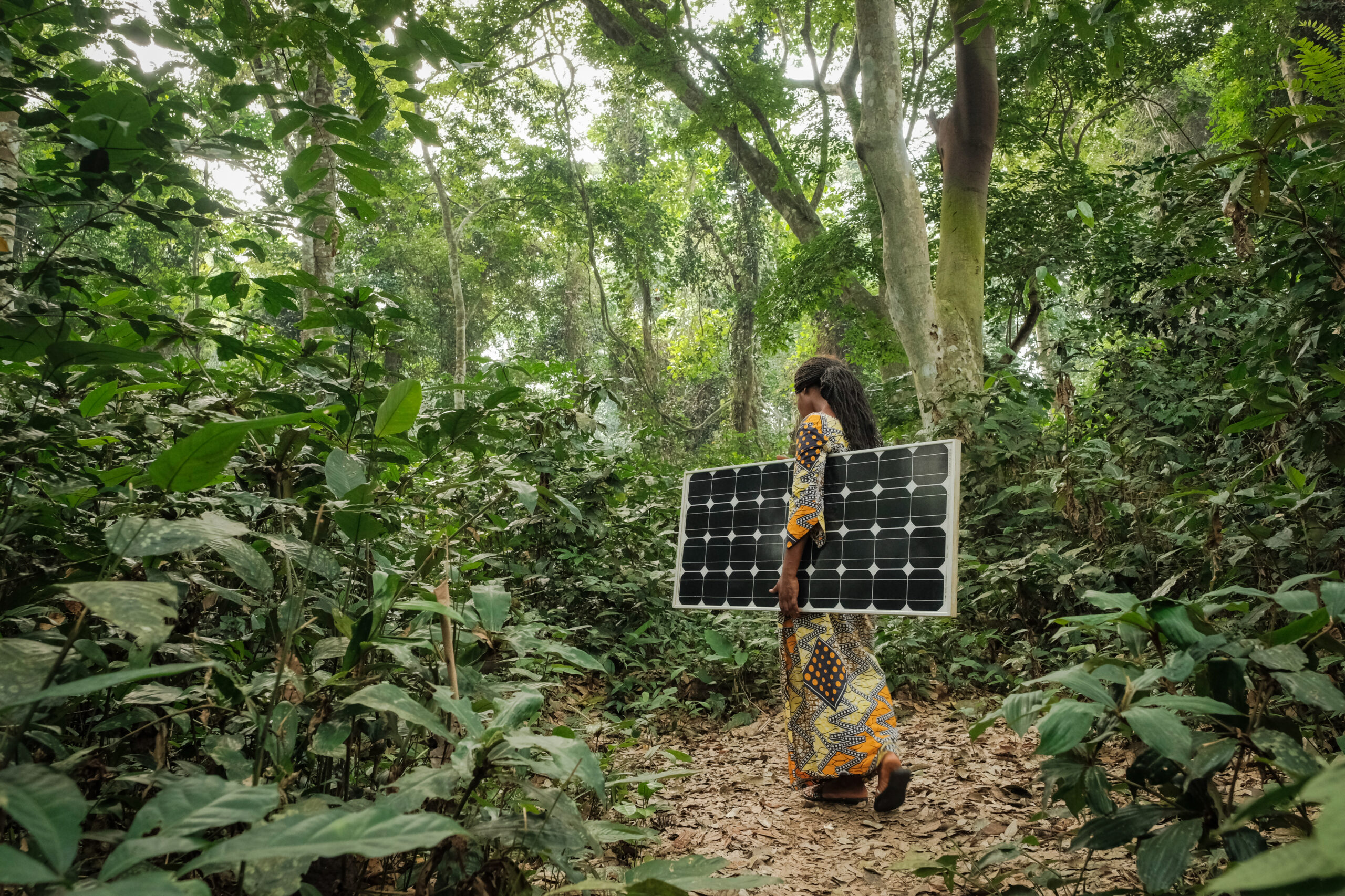
Woman carrying a solar pannel near Yangambi, DRC. Photo by Axel Fassio/CIFOR via Flickr under licence CC BY-NC-ND 2.0. https://flic.kr/p/27NYoQe
Gender-Responsive Renewable Energy for Empowerment and Inclusive Energy Transitions
Tuesday 10 November 2026
This side event, hosted by the International Centre for Integrated Mountain Development (ICIMOD) as part of COP31, will explore how gender-responsive renewable energy can strengthen women’s livelihoods, agency and economic opportunities, drawing on field experiences from regional and global evidence, policy and financing perspectives. This event is in-person only, and open to anyone attending the […]
Women working in their fields in GIE Kaout, a women- led agricultural cooperative in Senegal. The group of 32 women grow rice in order to develop the cultivation of other produce such as fruits and vegetables. Their plot is fenced and has a water tower with solar panels to run the pump. Credit: © JB Russell/Panos Pictures
From Clean Energy Transition to Just Energy Futures
18 November 2026
The major scientific and policy focus of the global clean energy transition has thus far been on issues of technological feasibility. Yet evidence from the Clean Energy for Development research initiative suggests that the greatest barriers to inclusive transition are often not technological, but financial, institutional, and social. Drawing on evidence from 12 projects across […]
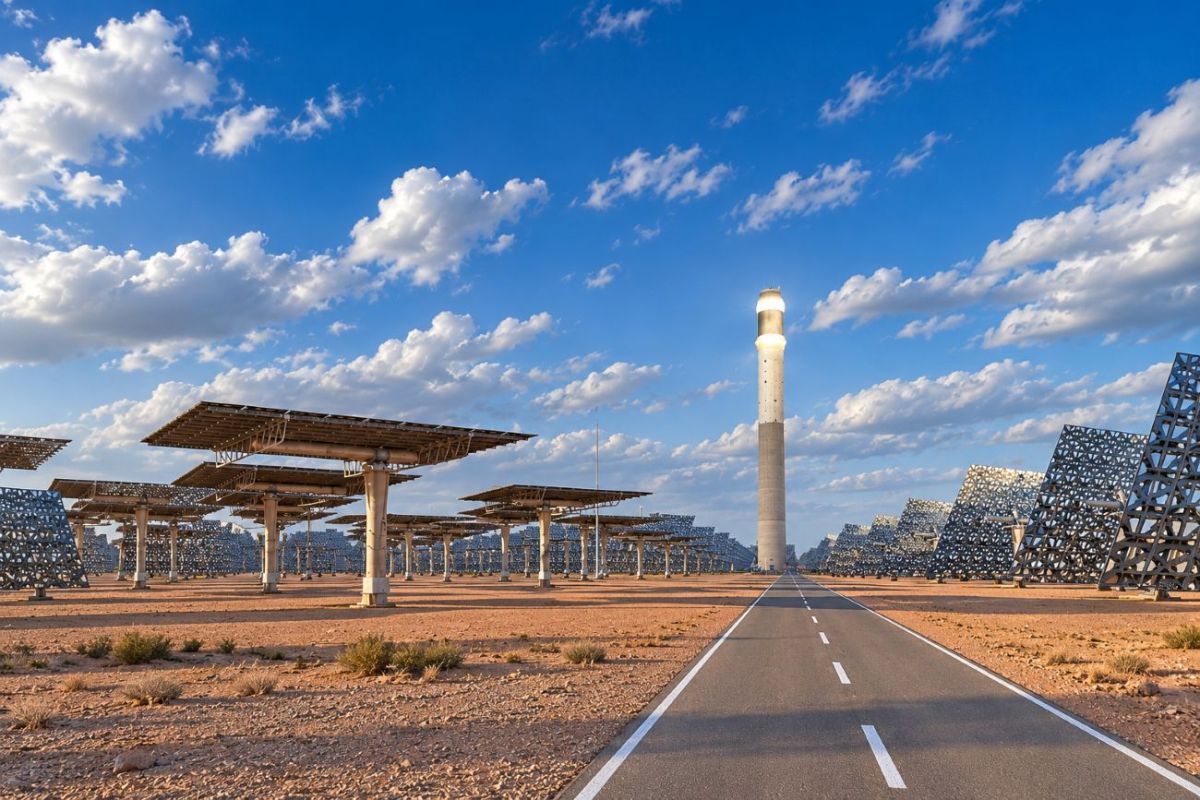
Concentrated Solar Pannels Farm, Noor III in Ouarzazate, Morocco, by Khalid Ghozlani, IDRC
Beyond electricity access: Making Mission 300 sustainable through productive use
3 November 2026
Over 560 million people in sub-Saharan Africa still live without electricity. To address this challenge, the World Bank, the African Development Bank and other partners recently launched Mission 300, an ambitious USD$54 billion (~CAD75 billion) initiative to connect 300 million people in sub-Sahara Africa to electricity by 2030. But for Mission 300 to succeed, a […]