

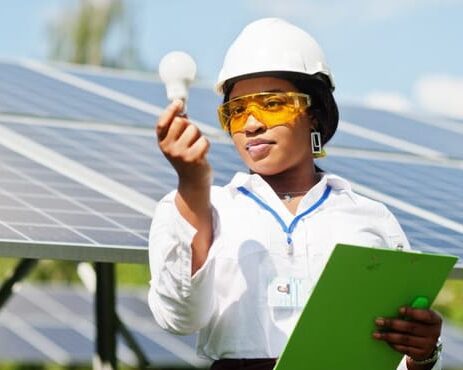
PEP-Led Conference Highlights Inclusive Green Energy Challenges in the Global South
2 June 2025
Following the COP29 summit in Azerbaijan, where partial funding commitments were made to support climate efforts in developing countries, the urgency for actionable solutions has never been clearer. Yet, despite these new pledges, the financing gap remains vast, and shifting geopolitical dynamics now pose even greater risks to global climate finance.
Developing economies in Africa, Asia, and Latin America face unique obstacles in financing and implementing green energy infrastructure. Beyond the technological and financial barriers, there is a pressing need to ensure that vulnerable groups, including women, youth, and rural micro, small, and medium-sized enterprises (MSMEs), are not left behind in the energy transition.
Drawing on PEP’s extensive research and engagement efforts, the 2025 Policy Conference will showcase cutting-edge findings and promote evidence-based policy dialogue. Highlights will include insights from:
- Sustainability Performances, Evidence, and Scenarios (SPES)project (funded by the EU Horizon program), where PEP fosters high-level dialogues on sustainable energy transitions.
- Rural renewable energy MSMEs operating to modernize agriculture in Sub Saharan Africa and South-East Asia (in collaboration with Environment for Development (EfD) with funding from the International Development Research Centre (IDRC)) to promote the adoption of low-carbon technologies by rural enterprises and the inclusion of women and youth in countries like Burkina Faso, Kenya, Uganda, and Vietnam.
- How Can Multilateral Development Banks Better Support Green Energy Transition and Financing in the Global South? Research supported by the Center for Global Development (CGD), examining feasible financing mechanisms for green energy transitions in Pakistan and South Africa.
Conference Program Overview:
9:00 AM — Welcome Remarks
- Carol Newman, Board Chair, PEP
- Jane Mariara, Executive Director, PEP
9:30 AM — Keynote Presentation
“Financing and Inclusivity in Green Energy Transitioning in the Global South”
Keynote Speaker: Dr. Simone Borghesi, Director, Florence School of Regulation – Climate, European University Institute
10:45 AM — Panel 1:
“Challenges in Financing and Implementing Green Energy Infrastructure Unique to the Global South”
Panelists:
- Muhammad Zeshan, Research Fellow, Pakistan Institute of Development Economics
- Prof. Adeola Adenikinju, Professor of Economics, University of Ibadan, Nigeria
- Bhim Adhikari, Senior Program Specialist, IDRC
- Elizabeth Njenga, General Manager, Business Development, KenGen
2:00 PM — Panel 2:
“Towards a Just Green Transition: Integrating National Realities and Inclusivity”
Panelists:
- Agnès Zabsonré, Assistant Professor, Université Nazi Boni, Burkina Faso
- Aisha Nanyiti, Lecturer, Makerere University, Uganda
- Joanes Atela, Executive Director, African Research Impact Network
- Ann Kingiri, Principal Research Fellow and Director of Research and Innovation, African Centre for Technology Studies
4:00 PM — Key Takeaways and Research Agenda
4:30 PM — Closing Remarks
The 2025 PEP Policy Conference will bring together international researchers, policymakers, development practitioners, and other stakeholders to bridge the gap between research and policy, promoting inclusive and sustainable economic development.
PEP is thrilled to welcome participants both in-person and virtually. The event will be broadcast live on PEP’s YouTube channel starting at 9:00 a.m. (UTC+3).
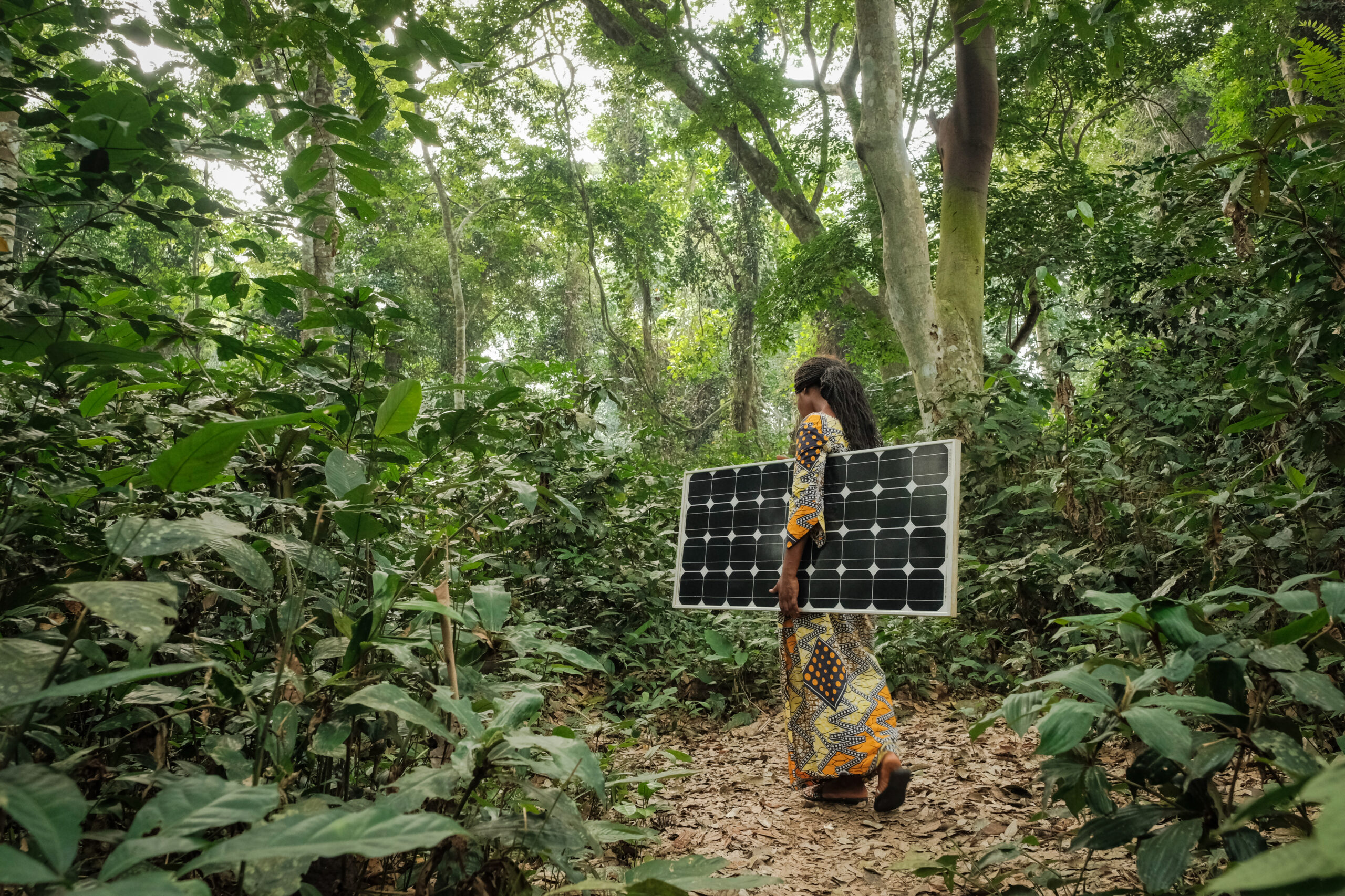
Woman carrying a solar pannel near Yangambi, DRC. Photo by Axel Fassio/CIFOR via Flickr under licence CC BY-NC-ND 2.0. https://flic.kr/p/27NYoQe
Gender-Responsive Renewable Energy for Empowerment and Inclusive Energy Transitions
Tuesday 10 November 2026
This side event, hosted by the International Centre for Integrated Mountain Development (ICIMOD) as part of COP31, will explore how gender-responsive renewable energy can strengthen women’s livelihoods, agency and economic opportunities, drawing on field experiences from regional and global evidence, policy and financing perspectives. This event is in-person only, and open to anyone attending the […]
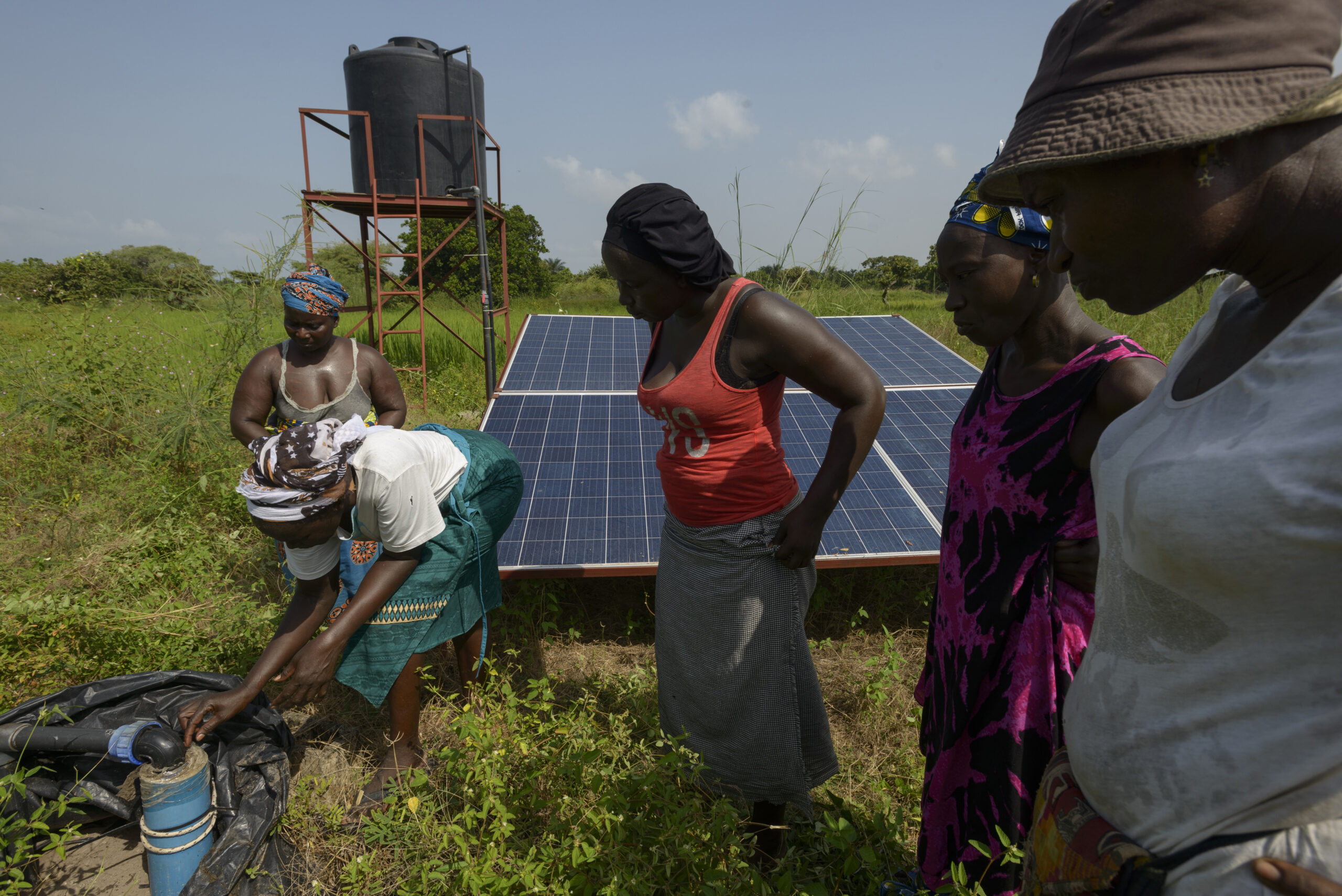
Women working in their fields in GIE Kaout, a women- led agricultural cooperative in Senegal. The group of 32 women grow rice in order to develop the cultivation of other produce such as fruits and vegetables. Their plot is fenced and has a water tower with solar panels to run the pump. Credit: © JB Russell/Panos Pictures
From Clean Energy Transition to Just Energy Futures
18 November 2026
The major scientific and policy focus of the global clean energy transition has thus far been on issues of technological feasibility. Yet evidence from the Clean Energy for Development research initiative suggests that the greatest barriers to inclusive transition are often not technological, but financial, institutional, and social. Drawing on evidence from 12 projects across […]
Women working in their fields in GIE Kaout, a women- led agricultural cooperative in Senegal. The group of 32 women grow rice in order to develop the cultivation of other produce such as fruits and vegetables. Their plot is fenced and has a water tower with solar panels to run the pump. Credit: © JB Russell/Panos Pictures
Beyond COP31: putting people at the heart of the clean energy transition
19 November 2026
As COP31 draws to a close, new evidence from across 27 countries shows that the biggest barriers to an inclusive clean energy transition are often not technological, but financial, institutional and social. As attention shifts from negotiation to delivery, a new research synthesis report ‘From Clean Energy Transition to Just Energy Futures’ offers a practical […]