

A woman carrying a large stack of firewood on her back. image: MyLoupe/UIG via Getty Images

CEDCA to host official T20 Side Event on Women, Youth & Clean Energy
10 June 2025
In this virtual panel event, we will bring together experts from various regions to address a critical challenge of our time: ensuring that women and youth are not left behind in the global transition to clean energy.
- Gender equity needs to be at the centre of clean energy policies, or women will become even more marginalised.
- Clean energy business models often exploit small-scale business owners, particularly women and youth.
- Women face disproportionately unequal access to clean energy worldwide.
- The green transition must be gender sensitive, inclusive, and just.
The clean energy transition represents one of the most significant economic and environmental shifts of our generation. Despite the burgeoning opportunities in renewable energy sectors, women and youth—particularly in developing regions—continue to face disproportionate barriers to participation.
Although there is tremendous potential for employment creation and business opportunities in clean energy almost everywhere in the world, a growing concern is that women, who are already underrepresented in the energy sector, will become even more marginalised if gender equity strategies are not proactively integrated into policy, business planning, and action. Without appropriately tailored skills development, training, education, apprenticeships, employment placement, financial tools, and supportive social policies, transitioning to clean energy may exacerbate existing gender inequities, limit economic growth, and hinder global poverty alleviation goals, including the Sustainable Development Goals (SDGs).
In this event, the diverse set of experts will present the evidence and discuss policy and business options to optimise the participation of women and youth in the energy sector, building on the ‘Principles for Just and Inclusive Energy Transitions’ developed under the Brazilian G20 presidency. This includes exploring issues around policy inclusiveness, incorporating intersectional perspectives on gender balance into energy planning and policies and workforce transformation through reskilling and up-skilling to create avenues of employment, while creating greater opportunities for all.
This is an official T20 side event. The panellists all represent the Clean Energy for Development: A Call to Action (CEDCA) research initiative, funded by the International Development Research Centre (IDRC). The Institute of Development Studies convenes the panel.
Speakers
- Ann Kingiri, Director of Research, African Centre for Technology Studies (ACTS)
- Michele Diop Niang, Director of Regional Bureau, West Africa, Desjardins International Development (DID)
- Hala Abou-Ali, Professor, Cairo University and Economic Research Forum (ERF)
Chair
- Bipasha Baruah, Professor & Canada Research Chair in Global Women’s Issues
Time and date
This event will take place on 12 June 2025, from 12:00 to 13:30 BST.
How to attend
You can register here to watch online.
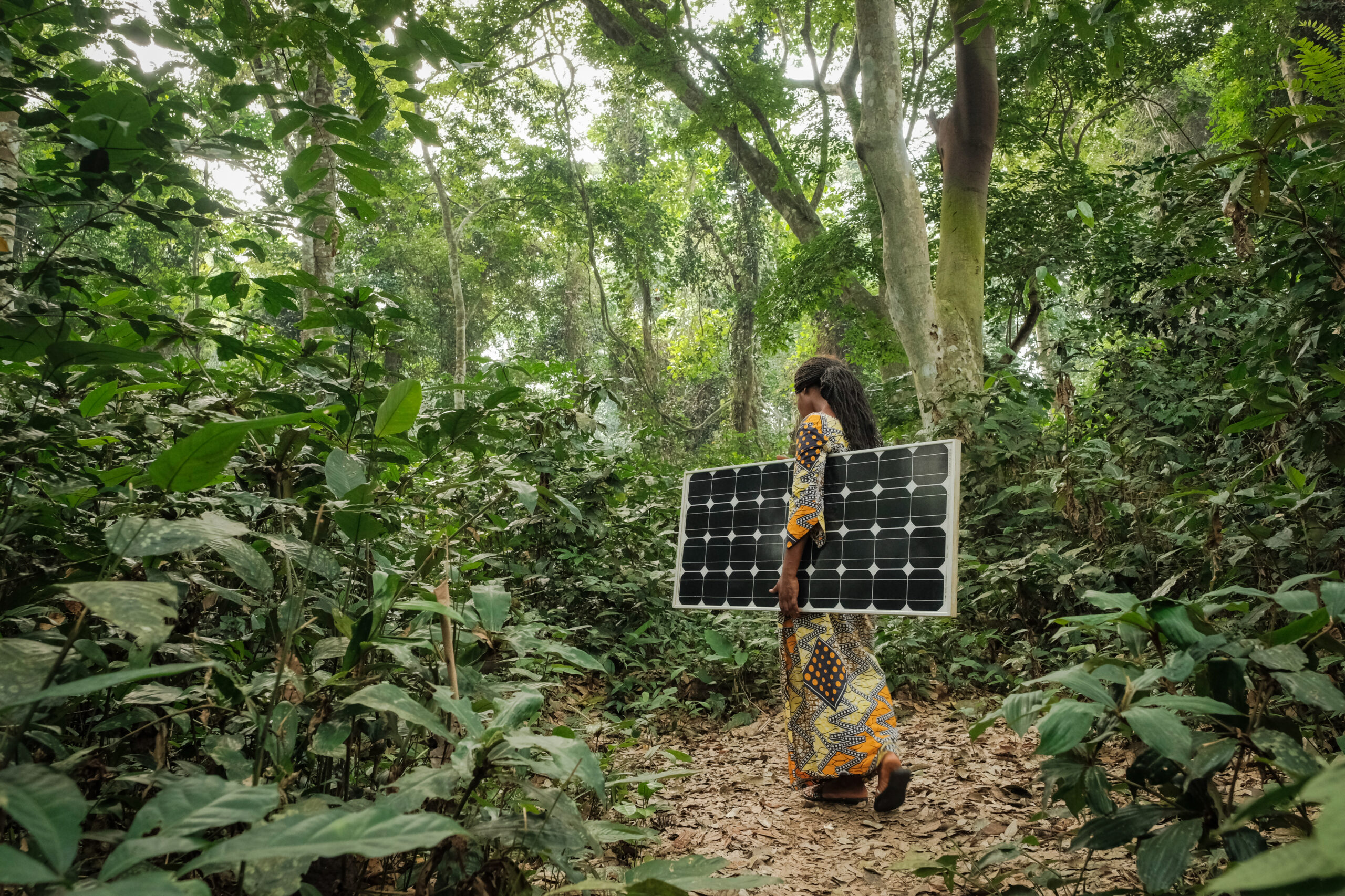
Woman carrying a solar pannel near Yangambi, DRC. Photo by Axel Fassio/CIFOR via Flickr under licence CC BY-NC-ND 2.0. https://flic.kr/p/27NYoQe
Gender-Responsive Renewable Energy for Empowerment and Inclusive Energy Transitions
Tuesday 10 November 2026
This side event, hosted by the International Centre for Integrated Mountain Development (ICIMOD) as part of COP31, will explore how gender-responsive renewable energy can strengthen women’s livelihoods, agency and economic opportunities, drawing on field experiences from regional and global evidence, policy and financing perspectives. This event is in-person only, and open to anyone attending the […]
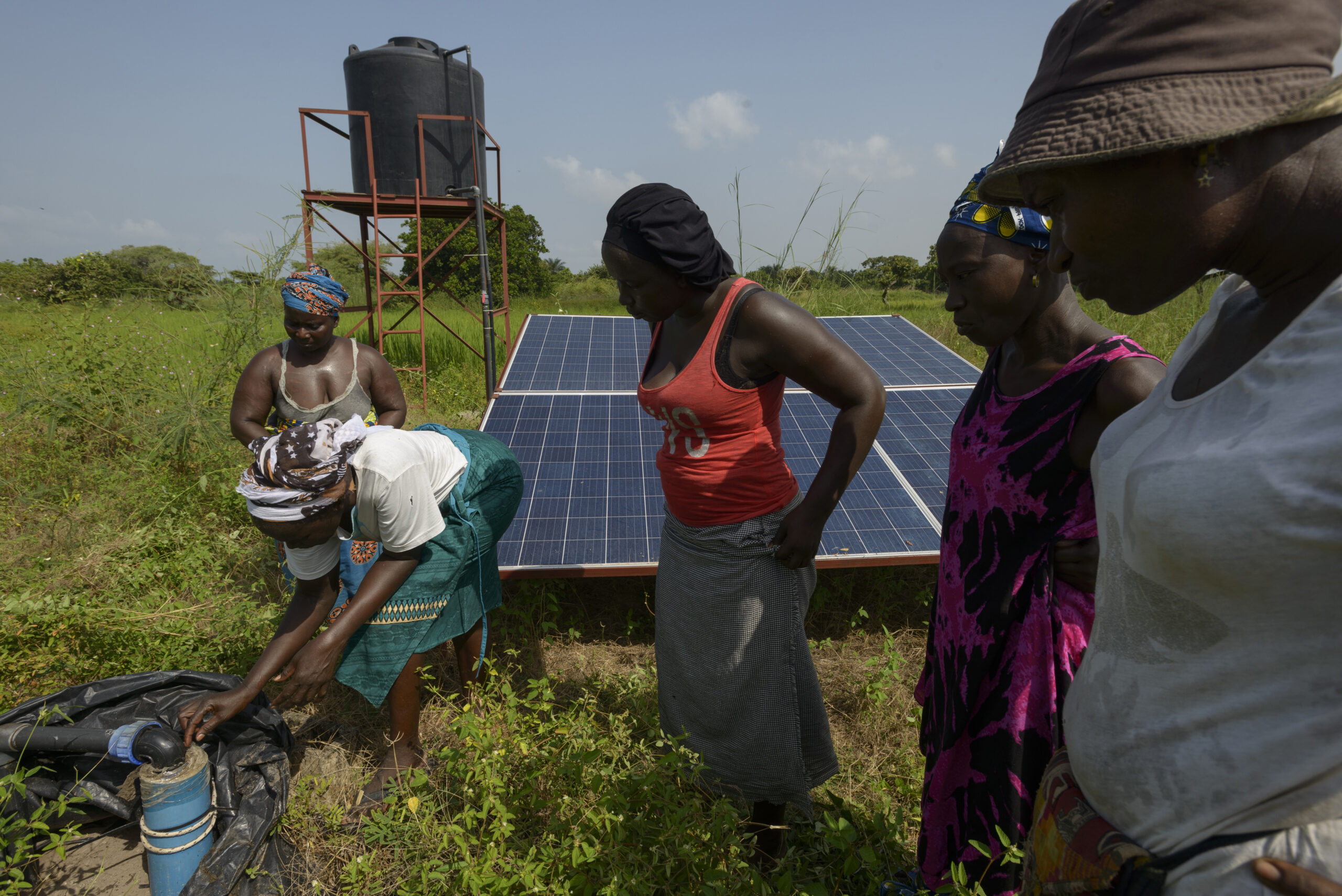
Women working in their fields in GIE Kaout, a women- led agricultural cooperative in Senegal. The group of 32 women grow rice in order to develop the cultivation of other produce such as fruits and vegetables. Their plot is fenced and has a water tower with solar panels to run the pump. Credit: © JB Russell/Panos Pictures
From Clean Energy Transition to Just Energy Futures
18 November 2026
The major scientific and policy focus of the global clean energy transition has thus far been on issues of technological feasibility. Yet evidence from the Clean Energy for Development research initiative suggests that the greatest barriers to inclusive transition are often not technological, but financial, institutional, and social. Drawing on evidence from 12 projects across […]
Women working in their fields in GIE Kaout, a women- led agricultural cooperative in Senegal. The group of 32 women grow rice in order to develop the cultivation of other produce such as fruits and vegetables. Their plot is fenced and has a water tower with solar panels to run the pump. Credit: © JB Russell/Panos Pictures
Beyond COP31: putting people at the heart of the clean energy transition
19 November 2026
As COP31 draws to a close, new evidence from across 27 countries shows that the biggest barriers to an inclusive clean energy transition are often not technological, but financial, institutional and social. As attention shifts from negotiation to delivery, a new research synthesis report ‘From Clean Energy Transition to Just Energy Futures’ offers a practical […]