

Credit: IDRC
Supporting economic growth and climate action through renewable energy: Insights from fish farming in Bolivia
8 December 2025
Agriculture continues to represent a critical source of foreign exchange and job creation throughout the Global South. The future growth and development of the sector depend on farmers, processors and traders finding innovative ways to produce more and better-quality products or to reduce costs, without harming the natural resource base. Renewable energy — in particular, decentralized solar-powered systems — can help lower energy costs and reduce carbon emissions for farmers who currently rely on fossil fuels to power pumps and move goods or to cook, dry and cool products.
Solar power is already advancing energy goals in the Global South. In Africa, partnerships between development banks, energy companies and NGOs are focusing on expanding this technology for households, businesses, schools and hospitals. For example, the World Bank announced a USD2.7 billion (CAD3.8 billion) investment to bring electricity to about 40 million people on the continent by 2030. In Latin America, solar power forms an important part of official efforts to reduce reliance on fossil fuels, yet the strategies to use these systems in agriculture are still limited and understudied.
Research from an IDRC-supported project in Bolivia shows that solar-powered systems can make fish farming more affordable and productive, helping farmers reduce energy costs and improve output. But the study also highlights major barriers that limit wider adoption. These gaps mean that while the technology has clear benefits, scaling it up will require stronger markets, better information and more accessible financing.
Research highlights
- Ongoing research by Fundacion Bariloche and Immersive Consulting shows that on-grid solar-powered generation systems could help fish farmers reduce costs and improve productivity.
- These experiences also show that simply demonstrating the technology is not enough to make a big impact. The potential for impact rests on thousands of farmers in Chapare, and elsewhere in Bolivia, being informed about solar-power systems and being able to purchase, maintain and repair them.
- Looking ahead, there is an opportunity for researchers to work with stakeholders to help shape policies that support the wider use of solar power in rural areas.
Getting solar power to more farmers and small businesses
To expand solar power into the agricultural sector, it’s important to consider the energy requirements of farmers and owners of small and medium-sized enterprises (SMEs), the challenges they face in adopting this technology and the solutions that might help. It’s also important to consider how farmers and business owners differ in their energy needs and access based on factors like gender, age and income.
So far, most research has focused on how solar-powered generation systems work and what benefits they hold for farmers — such as improved irrigation, water pumping and greenhouse operations. Research has also confirmed the technical and economic viability of the systems, with applications ranging from solar-powered rickshaws for transport to smart rooftop irrigation systems.
However, less attention has been given to whether women, youth and Indigenous farmers and SME owners in rural areas can access these systems. Expanding solar power in agriculture depends on various actors, including sellers, regulators, utility providers and financial institutions. Unlike household solar-powered systems, agricultural set-ups are larger, costlier and more complex, while regulatory frameworks and business strategies for rural deployment remain underdeveloped.
To support renewable energy access for disadvantaged populations in the Global South, IDRC launched the Clean Energy for Development: A Call for Action (CEDCA) initiative in 2023. In Bolivia, a CEDCA project explored how solar power could improve small-scale agriculture and advance Bolivia’s transition towards renewable energy.
Solar-powered fish farming in Bolivia
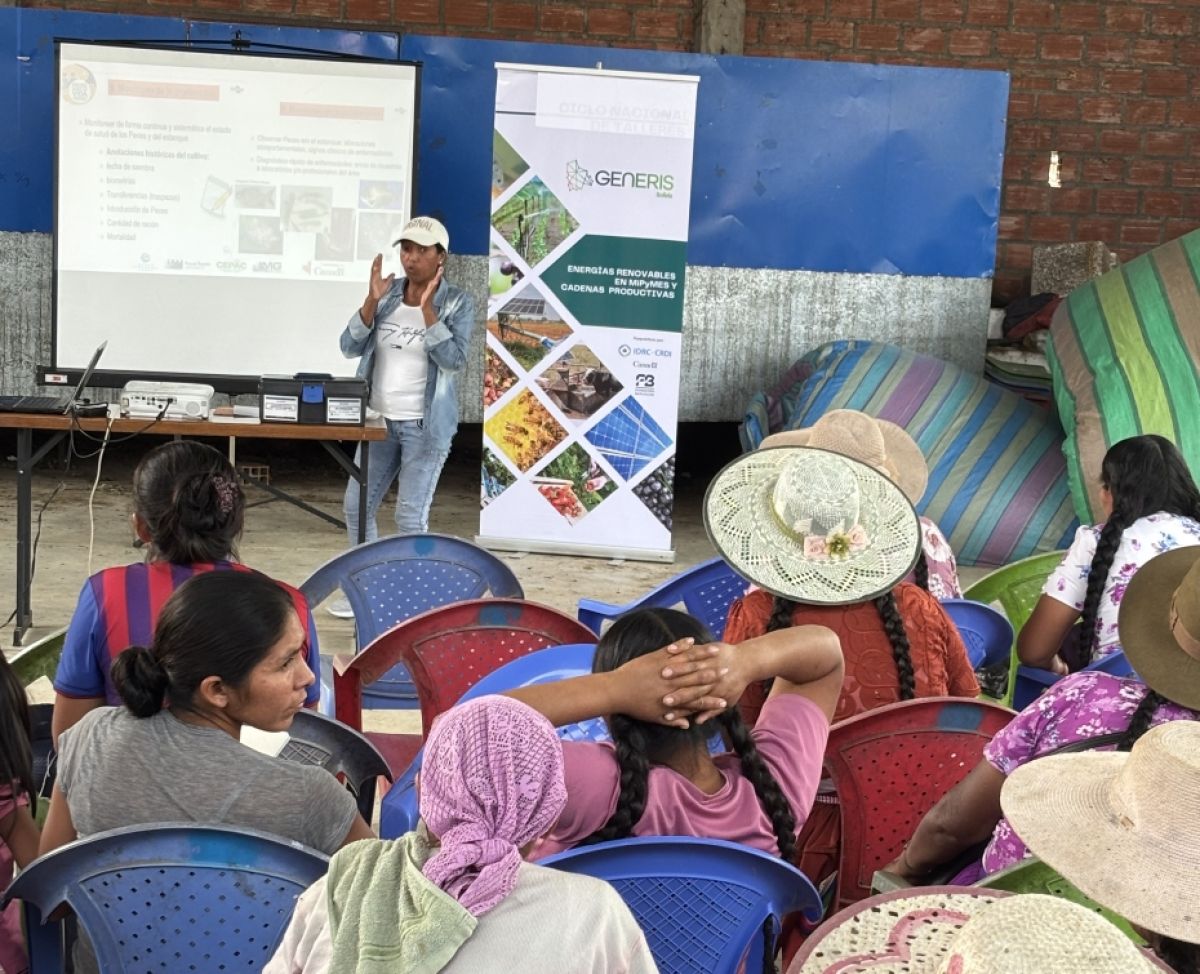
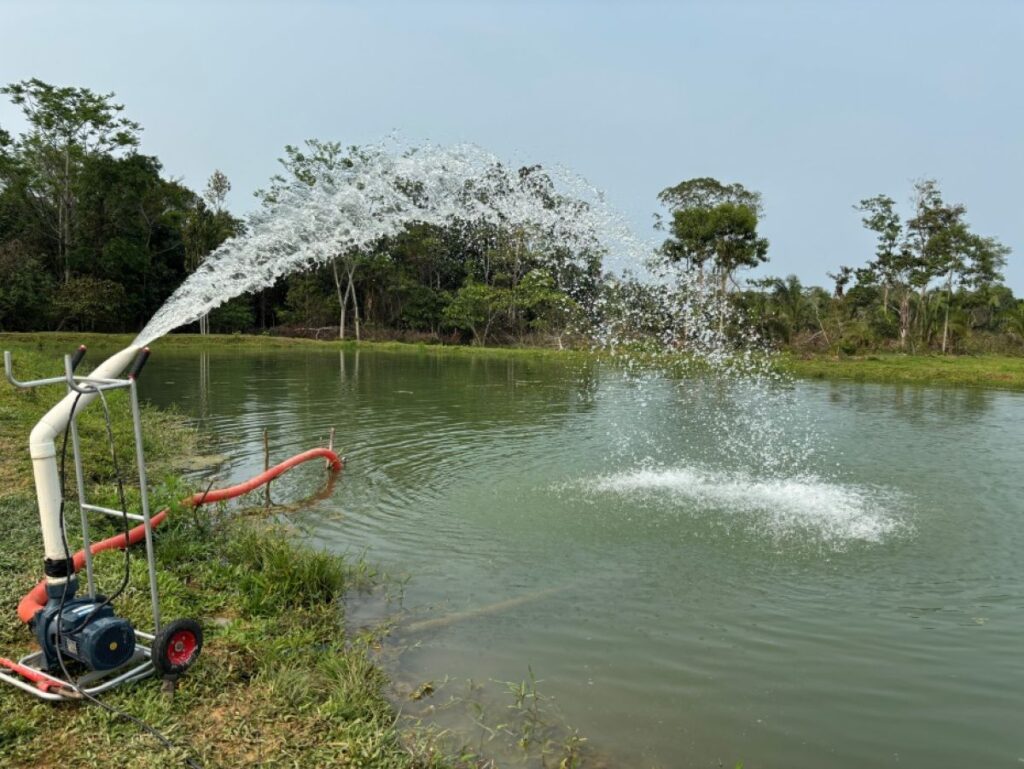
In Chapare, Bolivia, fish farming is expanding and now supports the livelihoods of around 3,000 families. Because fish ponds are often located near homes, women and youth can easily participate. As regional production increases, these families are under pressure to increase productivity. At the same time, they are struggling with limited access to the gasoline required to run the generators for pumps and oxygenators. Due to Bolivia’s energy crisis, even buying a few gallons of gasoline can mean queuing for hours at filling stations for subsidized fuel, or paying three times the cost on the black market.
Ongoing research by Fundacion Bariloche and Immersive Consulting shows that on-grid solar-powered generation systems could help fish farmers reduce costs and improve productivity.
The teams interviewed dozens of fish farmers, bank representatives, government officials, solar industry representatives and fish sellers, and installed solar-powered generation systems (1.5-2.5 Kw) at three farms. Installation costs around CAD3,400 per kilowatt and farmers had to cover extra infrastructure expenses like power poles and wiring, adding more than 30% to the total cost. By switching to solar, farmers save around 1,600 liters of gasoline over a 10-month production period — cutting production costs by about CAD2,500. Longer aeration periods also allowed them to raise about 20% more fish per pond. The combination of savings in production expenses and increased productivity allows farmers to recover investment costs in relatively short periods (2-4 years).
However, the project revealed important challenges to scaling solar power to thousands of fish farmers in Chapare. The market is still developing. There are few suppliers and they are located hours away and focused on larger-scale urban-based clients, such as schools and hospitals. These sellers lack information about farmers’ needs and have little incentive to serve rural areas. While farmers showed strong interest during project-supported demonstration events, many were discouraged by the high up-front costs. Local banks have not introduced financing options and, two years after the case studies began, farmers still can’t sell extra solar energy back to the grid — limiting both economic and environmental benefits.
Credit: IDRC
The promise of renewable energy
Early evidence from Bolivia reaffirms the benefits of solar-power systems for small-scale fish farming households: access to solar-powered irrigation pumps and pond oxygenators reduce costs, free up time and reduce contamination. These experiences also show that simply demonstrating the technology is not enough to make a big impact. The potential for impact rests on thousands of farmers in Chapare, and elsewhere in Bolivia, being informed about solar-powered systems and being able to purchase, maintain and repair them. In this sense, scaling solar-powered systems and empowering women farmers and entrepreneurs as agents of change will require clear strategies and coordinated efforts related to governance, market development and capacity building.
Looking ahead, there is an opportunity for researchers to work with stakeholders to help shape policies that support the wider use of solar power in rural areas. Priorities for future research include:
- designing financial solutions for solar-power investments, including participation in carbon markets
- creating scalable approaches to inform farmers and business owners on the benefits and costs of solar-powered generation systems
- strengthening regulatory frameworks to encourage supply and demand and better coordination across the energy sector
- developing decision-support tools to help choose the right farming activities and assess the benefit and costs of local needs based on solar energy
- incentivizing the expansion of services for installation and maintenance in rural areas, with an eye on employment opportunities for women and youth
This blog was originally shared on the IDRC website on 1 December 2025.
blog
Lead Partner
Fundacion Bariloche
Associated Project
Decentralised Renewable and Inclusive Energy Systems in Bolivia (GENERIS)
Credit: 'Two women working in a clothing factory' by Dominic Chavez/World Bank. CC BY-NC-ND 2.0
Women’s leadership and innovative finance: Driving climate resilience and sustainable development
Thursday 20 November 2025
This panel, hosted as part of COP30, will explore how women’s leadership and inclusive financial innovation serve as powerful levers for climate resilience and sustainable development. The session will highlight concrete examples internationally, focusing on the intersection of gender equity, entrepreneurship, and climate action. Panellists: Adel Ben Youssef, Université Côte d’Azur – featured Clean Energy […]
Unlocking the Potential of Small and Medium Businesses and Entrepreneurs in the Clean Energy Transition
3 December 2025
This report highlights outcomes and recommendations from the T20 Side Event ‘Unlocking the Potential of Small and Medium Businesses and Entrepreneurs in the Clean Energy Transition’, held in Johannesburg on 17 October 2025. It presents seven recommendations for concrete steps to turn the G20’s green energy principles into practice, with South Africa’s presidency positioned as […]
Credit: IDRC
Supporting economic growth and climate action through renewable energy: Insights from fish farming in Bolivia
8 December 2025
Agriculture continues to represent a critical source of foreign exchange and job creation throughout the Global South. The future growth and development of the sector depend on farmers, processors and traders finding innovative ways to produce more and better-quality products or to reduce costs, without harming the natural resource base. Renewable energy — in particular, […]