

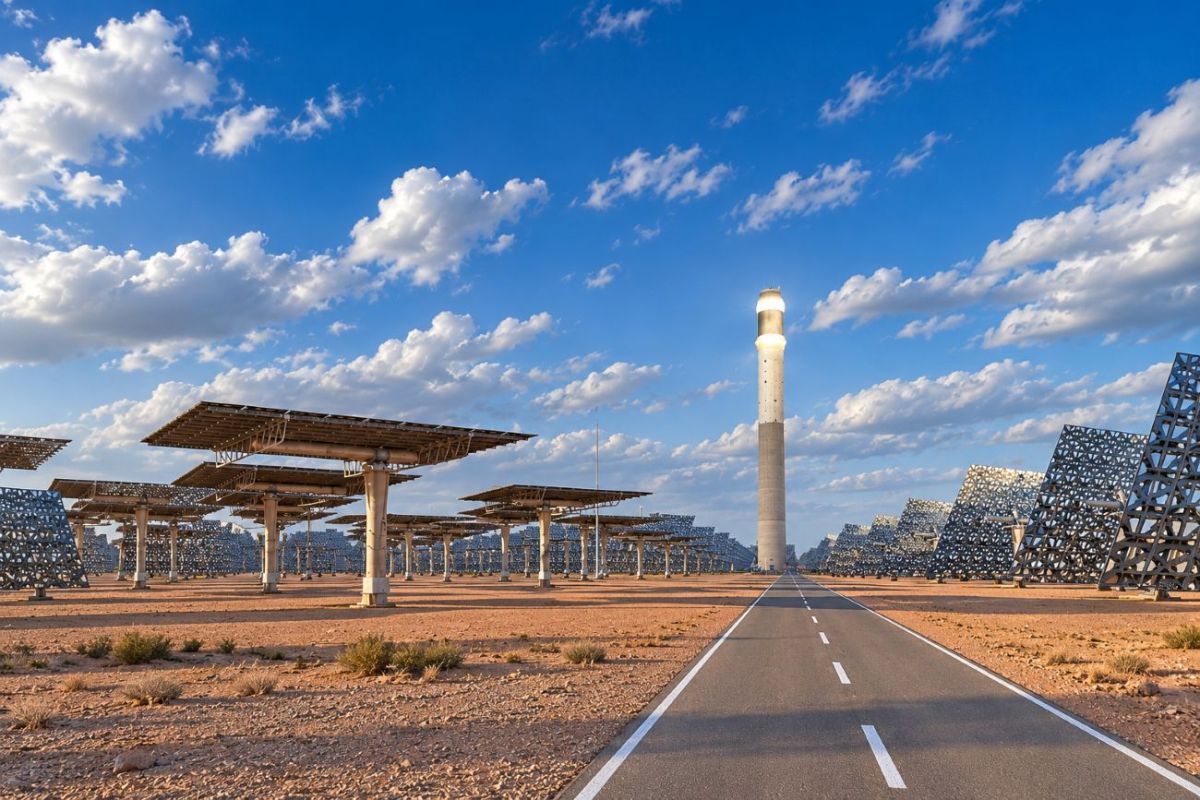
Over 560 million people in sub-Saharan Africa still live without electricity. To address this challenge, the World Bank, the African Development Bank and other partners recently launched Mission 300, an ambitious USD$54 billion (~CAD75 billion) initiative to connect 300 million people in sub-Sahara Africa to electricity by 2030.
But for Mission 300 to succeed, a paradigm shift is needed: infrastructure alone does not guarantee sustainable access. The solution is to empower populations to use electricity productively to pay for itself, and pool resources to make productive activities and energy systems viable at the community level.
Why have traditional approaches not worked? The answer is stark: poverty. Many financiers view low-income populations as “not solvable”: unable to pay consistently for electricity, even where infrastructure is available. With limited budgets, governments face difficult trade-offs: they, prioritize communities that can sustain payments. After all, when communities can’t pay, facilities fall into disrepair or cease operating altogether, and governments end up repaying the debts at the expense of new investments.
For the private sector, the logic is simple: without a viable customer base, electrification projects are considered “unbankable.”
The assumption that low-income populations are “unbankable” has long shaped investment patterns. Yet, as C.K. Prahalad argued in The Fortune at the Bottom of the Pyramid, poverty should be viewed not as a barrier to markets but as an invitation to innovate.
People living without electricity are not merely potential aid recipients; they are entrepreneurs, consumers, and contributors in waiting. The challenge doesn’t lie in their inability to pay, but in our inability to design solutions that match their realities.
Emerging evidence from low-access contexts suggests that unlocking this potential requires business and financing models that make electricity reliable, affordable and—critically—income-generating. It means shifting from top-down projects to community-driven approaches that build skills, enterprises and value chains allowing electricity to pay for itself.
Pay-as-you-go systems and micro-franchising demonstrated what’s possible when creativity meets constraint, reducing investor risk while supporting affordability. However, these models have largely reached populations that have already escaped extreme poverty or can meet collateral requirements—not the hardest-to-reach communities targeted by Mission 300.
Wind farm near Petra, Jordan by Khalid Ghozlani, IDRC
Two approaches can guide the transformation.
Electricity should be treated as a productive input: something that can generate income, not just household consumption. The income can help households cover energy costs while supporting domestic uses like lighting, refrigeration and water pumping.
In this model, electricity for productive activities takes precedence. Household consumption becomes a consequence of income generation. The question is therefore not whether low-income populations can afford electricity, but whether they can become successful entrepreneurs within value chains that leverage their competitive advantages.
Off-grid renewable-energy systems (e.g. intermittent ones like solar, wind and hydro, or baseload like advanced geothermal) are more financially sustainable when serving communities rather than individual households. Communities must therefore jointly operate, maintain and manage these systems.
Collaboration also strengthens entrepreneurial competitiveness. Communities with limited resources can share revenue-generating equipment and costs, exchange knowledge and position themselves strategically within selected supply chains.
But collective entrepreneurship doesn’t emerge on its own. Communities require targeted support in financial literacy, business management and sector-specific skills to transform “unbankable” individuals into successful cooperatives that generate income and finance their members’ electricity needs.
Mission 300 is a historic opportunity to transform electricity access across Africa. But its success should be measured not only by connections made or megawatts installed, but by livelihoods transformed. By making productive use central to electrification, Mission 300 can help communities generate income, sustain their electricity access and turn energy infrastructure into lasting economic development.
IDRC’s “Clean Energy for Development: Call for Action” (CEDCA) initiative supports 12 research projects in 27 countries across three areas: clean energy transition, micro-, small and medium-sized enterprises (MSMEs), and women and youth. Particularly, the research provides insights into the challenges of electrification in Sudan. Learn more on CEDCA: Research projects around the world – Clean Energy for Development
This blog was originally shared on the IDRC website on 15 October 2026.
Clean energy transitions are often discussed in terms of technology, finance and climate targets. But what changes when we put care at the centre?
Across many low- and middle-income countries, women and girls carry a disproportionate share of unpaid care and domestic work. Cooking, collecting fuel and water, caring for others, processing food, and sustaining household livelihoods are all closely tied to energy access. When energy is unreliable, costly, or difficult to obtain, these tasks take longer, demand more physical effort, and leave less time for rest, learning, paid work, or public participation.
Clean energy technologies can ease these burdens. Solar irrigation, renewable-powered agro-processing equipment, decentralised energy systems, and cleaner cooking solutions can reduce the time and physical strain associated with essential work. Yet saving time is not the same as transforming gender relations.
A recent webinar brought together researchers and practitioners to examine how clean energy can do more than expand access to power: it can reduce drudgery, reshape unpaid care work, and open up new opportunities for women.
The discussion drew on the report Clean Energy Transitions: A Care Economy Lens, which brings together evidence from West Africa, Vietnam, Burkina Faso, Uganda, and Kenya. Its central finding is that transitions become genuinely transformative only when they address unequal power relations, access to finance, control over assets and income, and the unequal distribution of care.
Evidence from rural contexts shows that energy systems are not gender neutral. Women frequently sit at the intersection of energy poverty, agricultural labour, and unpaid care. Manual irrigation, unreliable energy, and the need to collect water or fuel extend their working days and increase physical strain.
Solar irrigation and similar labour-saving tools can reduce this burden, but awareness alone does not drive uptake. Women also need affordable finance, particularly where they lack collateral, asset ownership, or access to suitable credit.
Clean energy can free up time, but wider gender norms determine who benefits. Time saved may simply be absorbed into more productive or unpaid work. Energy access therefore matters, but agency determines whether time savings improve rights and wellbeing. Programmes need to ask who owns and controls the technology, who decides how income is used, who benefits from greater productivity, and whether care is shared more fairly.
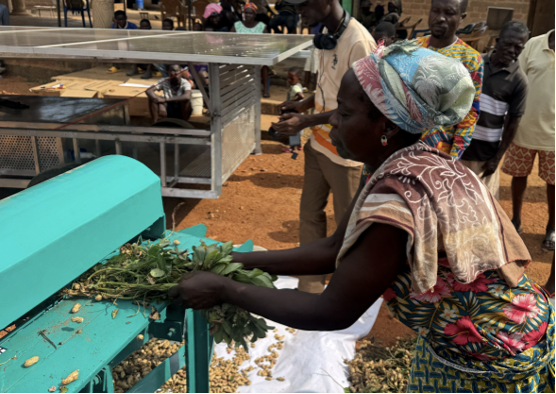
Women farmers and processors often complete highly labour-intensive tasks manually, from irrigating fields to processing cassava, grains, and groundnuts. Renewable-powered technologies such as solar dryers, grain winnowers, and cassava processing equipment can significantly reduce this labour. To be effective, however, technologies must be designed around women’s lived realities, including affordability, accessibility, ease of use, and proximity.
Women are too often involved only as end users rather than as designers, innovators, and owners. Supporting their participation in clean technology requires access to capital, green finance literacy, mentoring, and networks connecting entrepreneurs, policymakers, researchers, and the private sector. It also means involving women early enough for their needs to shape the technology itself.
Collateral-free credit, pay-as-you-go models, grants, accessible energy hubs, and capacity strengthening can help women benefit from clean technologies. Policies also need care indicators and better time-use data, so success is measured through changes in workload, wellbeing, agency, and opportunity – not simply the number of technologies deployed.
The webinar’s message was clear: a just energy transition cannot be judged only by megawatts generated or technologies deployed. It must also be judged by whether it reduces everyday burdens, expands women’s choices, and supports a fairer distribution of care. The 3Rs framework offers a practical guide: recognise unpaid care as real and valuable work; reduce its time and physical burden; and redistribute responsibility more fairly between women and men, households, communities, and public services.
To explore the evidence and practical recommendations in more depth, read Clean Energy Transitions: A Care Economy Lens. The report shows why care must be built into the design, financing, and evaluation of clean energy transitions if they are to deliver meaningful gains in equality and wellbeing.